
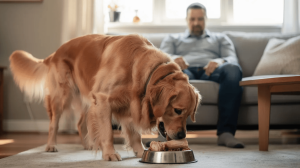
Resource guarding in dogs occurs when a dog uses avoidance, body language, threats, or aggression to maintain access to something it values—whether that is a food bowl, favorite toy, resting place, or even a particular person. Also called possessive aggression, resource guarding is a natural behavior that may be influenced by fear, anxiety, learning history, genetics, and the dog’s perception that a valued resource could be lost.
Appropriate management and behavior modification can help many dogs, but the safest approach depends on the behavior’s severity and bite risk.
This article is for everyday dog owners, including new adopters, families noticing a puppy growling over chews, and experienced owners who recognize that an adult dog’s behavior has changed. It focuses on pet dogs in family homes, particularly in the Syracuse, NY area, and covers guarding of food, toys, spaces, and people.
This is not a DIY guide for dogs with a serious bite history or uncontrolled aggression. Those cases require individualized guidance from a qualified behavior professional experienced with aggression or a board-certified veterinary behaviorist.
Resource guarding matters because it can create safety risks, especially for children, visitors, and other pets. It may also disrupt everyday routines and increase stress for both the dog and the household.
This guide explains:
- How to identify early warning signs
- What not to do when a dog guards a resource
- How management reduces immediate risk
- How reward-based training may help
- When veterinary or professional behavior support is necessary
Owners in Central New York can also consult Off Leash K9 Training of Syracuse to discuss available training options and program eligibility.

Understanding Resource Guarding in Dogs
Resource guarding refers to behavior a dog uses to maintain control of something it considers valuable. The dog may move away, block access, stiffen, stare, growl, snap, lunge, or bite when a person or another animal approaches.
Resource guarding can occur in dogs of any breed, size, age, or background. Genetics, early experiences, learning history, health, the home environment, and the value a dog assigns to a resource may all influence the behavior.
What Can a Dog Guard?
Commonly guarded resources include:
- Food bowls and treats
- Chews and bones
- Toys and balls
- Stolen objects, such as socks or food wrappers
- Crates, beds, and couches
- Doorways or other locations
- Access to a particular person
Value is individual. One dog may guard a tennis ball but ignore food, while another may guard a resting place or the owner’s lap.
A dog may also guard resources from particular people or animals rather than everyone. Identifying what the dog guards and who triggers the response is essential when developing a management plan.
Communication vs. Escalating Behavior
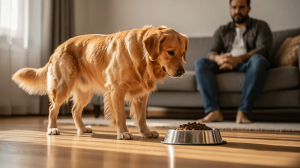
Moving away with an item, lowering the head, freezing, staring, and growling are forms of communication. They indicate that the dog is uncomfortable with someone approaching or attempting to take the resource.
Punishing a growl does not resolve the reason for the behavior. It may suppress an important warning while leaving the dog’s discomfort unchanged.
The goal is not to force a dog to tolerate repeated interference. The goal is to prevent conflict and, when appropriate, teach the dog that a person’s presence predicts safety and desirable outcomes.
Types and Early Signs of Resource Guarding
Resource guarding exists on a spectrum. Recognizing subtle signals can help owners intervene before the behavior escalates.
Warning Signs
Watch for:
- Freezing or sudden body stiffness
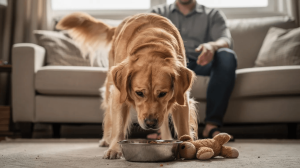
- Hovering or leaning over an item
- Lowering the head over a bowl or chew
- A hard stare or visible whites of the eyes
- Eating faster when someone approaches
- Carrying an object away
- Blocking another person or pet
- Growling, snarling, or lifting the lip
- Air snapping, lunging, chasing, or biting
Context matters. Note who was present, which resource was involved, how close the person or animal came, and what happened immediately before the response.
A silent freeze can be as important as a growl. Do not assume a quiet dog is comfortable.
Food, Object, Space, and Social Guarding
Food guarding may involve a bowl, chew, treat, dropped food, or human food within reach.
Object guarding may involve toys, sticks, tissues, socks, or stolen objects.
Space guarding may involve a crate, bed, couch, doorway, or room.
Social guarding occurs when a dog attempts to control access to a preferred person. The dog may block, growl, snap, or lunge when another person or animal approaches.
Understanding the guarded resource and the target of the behavior helps determine the appropriate safety plan.
Possible Contributing Factors
Resource guarding does not have one universal cause. Possible contributors include:
- Developmental changes: Guarding may first become noticeable as a puppy or adolescent matures, but it can emerge at any age.
- Environmental changes: A new baby, another pet, a move, or a major routine change may alter how a dog responds around valued resources.
- Learning history: Competition or previous loss of valued items may contribute, but resource guarding should not automatically be attributed to neglect, deprivation, or a dog’s rescue history.
- Pain or illness: Dental pain, arthritis, increased hunger, or another medical problem may contribute to a sudden behavioral change.
- Confrontational handling: Repeatedly taking away a bowl, prying objects from the dog’s mouth, or using physical punishment may increase conflict and bite risk.
A dog that suddenly begins guarding should receive a veterinary examination, particularly if the change is accompanied by pain, appetite changes, lethargy, irritability, or resistance to handling.
Assessing Severity and Protecting the Household
Consider the following factors:
- Intensity: Does the dog move away or stiffen, or does it lunge and bite?
- Frequency: Does the behavior occur occasionally or every day?
- Breadth: Does the dog guard one item or several types of resources?
- Predictability: Can the trigger be reliably identified?
- Targets: Is the behavior directed toward adults, children, visitors, or other animals?
- Bite history: Has the dog made contact or broken skin?
Keep a written log noting the resource, people or animals present, distance, warning signs, and outcome. This information can help a veterinarian or behavior professional evaluate the situation.
Do not deliberately provoke the dog to determine how serious the behavior is.
Immediate Safety and Management
Management reduces opportunities for conflict while a longer-term plan is developed.
- Feed animals in separate spaces with a closed door, gate, crate, or other secure barrier.
- Place food bowls in quiet, low-traffic areas.
- Leave the dog alone while it is eating.
- Pick up empty bowls only after the dog has left the area.
- Store high-value chews and toys when children, visitors, or other pets are present.
- Prevent access to items the dog commonly steals.
- Do not reach into the dog’s bowl.
- Do not forcibly remove guarded objects.
- Do not chase a dog carrying a stolen item.
- Restrict access to guarded furniture or rooms when necessary.
- Keep children physically separated from the dog whenever food, chews, or guarded objects are present.
The ASPCA’s food-guarding guidance also emphasizes management and professional assistance when bite risk is present.
When to Contact a Veterinarian or Behavior Professional
Arrange a veterinary examination if:
- Guarding begins suddenly
- The dog appears painful or ill
- Appetite or thirst changes
- The dog becomes sensitive to handling
- The behavior changes rapidly
Seek qualified behavior assistance if:
- The dog has bitten or attempted to bite
- A child is a target
- The dog guards multiple resources
- Guarding occurs in unpredictable situations
- Other dogs are fighting over resources
- The dog controls access to people or areas of the home
- The behavior is escalating
- You do not feel safe implementing a plan
A board-certified veterinary behaviorist can evaluate medical and behavioral factors and prescribe medication when medically appropriate. The American College of Veterinary Behaviorists provides a directory to find a veterinary behaviorist.
Owners seeking aggressive dog training in Syracuse should provide a complete description of the dog’s guarding behavior, triggers, and bite history so the trainer can determine whether the available program is appropriate.
Safe Behavior-Modification Principles
Desensitization and counterconditioning are commonly used to change how a dog responds when someone is near a valued resource. The person begins at a distance where the dog remains comfortable and pairs their presence with something desirable.
The work must remain below the dog’s reaction threshold. If the dog freezes, stiffens, stares, growls, stops eating, or begins eating faster, the person is too close or the exercise is progressing too quickly.
Distance-Based Food Exercise for Mild Cases
This example is limited to mild, predictable food guarding without a bite or attempted-bite history.
- Feed the dog in a quiet location without children or other pets present.
- Remain far enough away that the dog eats normally with relaxed body language.
- Toss a high-value food item toward the bowl without approaching.
- Walk away after tossing the food.
- Repeat only while the dog remains relaxed.
- End the exercise immediately if the dog shows tension.
Continue using distance. Do not offer food from a hand near the bowl, touch the bowl, or attempt to remove it while the dog is eating.
The VCA food-bowl safety guidance advises owners not to remove food while the dog is eating or test the dog by reaching toward it.
Children should never participate in these exercises. If the behavior is directed toward a child, consult a qualified professional.
Teaching “Drop It”
“Drop it” should first be taught with a low-value object that the dog does not guard.
- Give the dog a low-value toy.
- Present a desirable treat from a safe position.
- Say “drop it” once.
- Mark and reward when the dog releases the toy.
- Return the toy when it is safe to do so.
- Practice in short sessions without conflict.
Do not begin with an object the dog already guards intensely. If the dog stiffens, moves away, growls, or refuses the trade, stop and obtain professional guidance.
Teaching “Leave It”
“Leave it” teaches a dog not to take an item. It is different from “drop it,” which applies after the dog already has something.
Practice “leave it” with controlled, low-risk items and reward the dog for turning away. Do not use the exercise to test a dog around guarded food or objects.
Daily Management That Supports Training
- Feed dogs separately and keep barriers closed until all food is removed.
- Do not leave high-value chews loose in a multi-dog household.
- Put away tempting objects before visitors arrive.
- Avoid chase games involving stolen items.
- Give each pet separate resting and feeding areas.
- Make household rules consistent.
- Do not ask visitors to test the dog.
- Monitor progress through relaxed body language rather than forced handling.
These habits can reduce conflict and prevent repeated guarding incidents. Behavior modification may still be necessary when the behavior is escalating, difficult to predict, or creating a safety concern.
Choosing a Training Format
Resource guarding occurs in specific contexts, so owners often need direct coaching on household management, body-language observation, and safe training mechanics.
Private or in-home lessons may allow a professional to evaluate the environment where guarding occurs. However, availability and suitability depend on the trainer, location, bite history, and severity of the behavior.
Board and Train should not automatically be considered appropriate for resource guarding, aggression, or reactivity. Because guarding may be tied to particular people and household situations, owners remain an essential part of the behavior plan.
Review current training options and pricing and contact the provider before purchasing to confirm program eligibility.
The Role of Foundational Obedience
Cues such as “come,” “place,” “drop it,” and “leave it” can support management by giving owners practiced ways to guide a dog through some situations.
However, obedience alone does not change the anxiety or conflict associated with losing a valued resource. A dog may follow commands in ordinary circumstances and still guard food or objects when stressed.
Resource-guarding plans should prioritize:
- Environmental management
- Reward-based teaching
- Careful behavior modification
- Owner education
- Veterinary assessment when indicated
- Realistic safety expectations
Avoid using intimidation, leash corrections, prong collars, e-collars, or other aversive methods to confront a dog over a guarded item. The AVSAB humane dog-training guidance recommends reward-based training methods, including for behavior problems.
Common Mistakes
Punishing the Growl
A growl is a warning that the dog is uncomfortable. Punishment may suppress the warning without changing the underlying response.
Instead, create distance, prevent another confrontation, and revise the management plan.
Taking the Resource by Force
Grabbing the bowl, pulling an object from the dog’s mouth, or physically moving the dog may lead to a bite and teach the dog that approaching people cause valued items to disappear.
Use barriers, prevention, and professionally planned trades instead.
Testing the Dog
Do not repeatedly approach the bowl, put a hand in the food, take toys away, or ask family members to see whether the behavior has improved.
Progress should be evaluated through controlled exercises and relaxed body language, not provocation.
Chasing a Dog With a Stolen Item
Chasing may turn stealing into a game or increase the dog’s determination to keep the object.
Prevent access to unsafe objects and teach trades using low-value practice items.
Assuming the Dog Is Being Dominant
Resource guarding is not evidence that a dog is attempting to become the household leader. Dominance-based confrontations do not address why the dog feels compelled to maintain the resource.
Ignoring Early Warnings
Freezing, hard staring, hovering, and rapid eating are meaningful signals. Early management is safer than waiting for the behavior to escalate to snapping or biting.
Frequently Asked Questions
Can resource guarding in dogs be cured?
There is no universal cure or guaranteed outcome. Management and behavior modification can reduce guarding and improve safety in many cases, but results depend on the dog, triggers, severity, household, and consistency of the plan.
Should I take my dog’s food away to prevent guarding?
No. Repeatedly removing food may increase conflict. Allow the dog to eat in a quiet area and remove the empty bowl only after the dog has moved away.
Should I punish my dog for growling over food?
No. Growling communicates discomfort. Punishment may suppress the warning without resolving the underlying behavior.
Is it safe to trade for a guarded item?
Trading can be useful when it has already been taught with low-value items and the dog is relaxed. Do not approach or attempt a trade when the dog has a bite history, is actively threatening, or guards the item intensely.
Can children help train a dog that guards food?
No. Children should not approach, feed, test, or train a dog around guarded resources. Guarding directed toward a child requires professional assistance.
Does obedience training stop resource guarding?
Obedience can improve communication and support management, but it does not independently change the emotional response associated with guarding.
When should I consult a veterinary behaviorist?
Consult one when guarding is severe, unpredictable, associated with biting, affected by a possible medical condition, or not improving under a qualified behavior plan.
Conclusion and Next Steps
Resource guarding in dogs is not spite or a bid for dominance. It is behavior associated with maintaining access to something the dog values.
Thoughtful management, reward-based behavior modification, veterinary care when indicated, and qualified professional support can reduce risk and improve behavior in many cases. Progress varies, so safety and realistic expectations must remain central to the plan.
Start by:
- Recording the dog’s resources, triggers, and warning signs.
- Separating pets during meals and high-value chew time.
- Keeping children away from guarded resources.
- Stopping forced removal and confrontational handling.
- Scheduling a veterinary examination for sudden behavioral changes.
- Obtaining professional help when guarding involves biting, children, multiple resources, or unpredictable aggression.
If you are in the Syracuse, NY area, contact a trainer to discuss your dog’s behavior history, safety concerns, and program eligibility. Early assessment can help you establish an appropriate management and training plan before the behavior becomes more difficult or dangerous.
