
Have you ever looked over at your dog while they’re sleeping and wondered how they could possibly be that comfortable?
From curling into a tiny ball to stretching out like Superman, dogs have some pretty funny ways of getting comfortable. But these dog sleeping positions can also give us a few clues about their comfort, environment, and sleeping habits.
While a sleeping position doesn’t tell us everything about a dog’s personality, different positions can be influenced by temperature, comfort, surroundings, and how relaxed they feel.
Let’s take a look at 5 common dog sleeping positions and what they may mean.
1. The Donut

The Donut is when your dog curls tightly into a ball with their tail wrapped around their body.
This position can help conserve body heat and protect their chest and abdomen. It’s especially common when dogs want to stay warm, but many dogs also sleep this way simply because it feels cozy and comfortable.
If your dog loves curling into a little ball for bedtime, they’ve probably found a position that works perfectly for them.
What it may mean: Your dog is cozy, comfortable, and settling in for a good nap.
2. The Side Sleeper
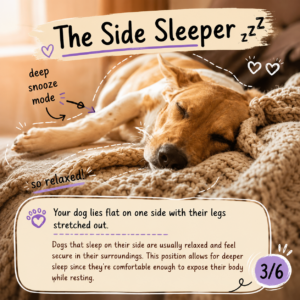
One of the most common dog sleeping positions is lying completely on their side with their legs stretched out.
Sleeping on their side allows dogs to relax their muscles and stretch their bodies. Dogs that choose this position may feel comfortable and secure in their surroundings.
You may also notice your dog twitching their paws or moving their legs while sleeping. Those little movements can happen during normal dreaming.
What it may mean: Your dog may feel relaxed and comfortable enough to settle into deeper sleep.
3. The Superman

Front legs stretched forward, back legs stretched behind, and belly flat against the floor.
This is The Superman!
This position is especially common in puppies and energetic dogs. It lets them rest while staying in a position that makes it easy to get back up.
It’s almost like they’re saying, “I’m taking a nap, but I’m still ready to play!”
What it may mean: Your dog is resting while staying ready to jump back into action.
4. The Belly Up

Four paws in the air with their belly exposed? The Belly Up is one of the most relaxed-looking dog sleeping positions.
A dog’s belly is a vulnerable area, so some dogs may choose this position when they feel comfortable and secure in their surroundings. It can also help them cool down because the belly generally has less fur than other parts of the body.
The American Kennel Club explains more about why dogs sleep on their backs, including how this position can be related to comfort and temperature regulation.
Of course, every dog is different. Some simply prefer sleeping this way because it feels comfortable.
What it may mean: Your dog may be feeling comfortable, relaxed, and secure.
5. The Lion Pose
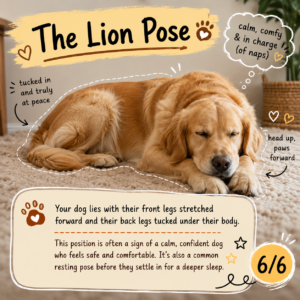
In the Lion Pose, your dog’s front legs are stretched forward while their back legs remain tucked underneath their body.
This position allows your dog to rest while making it relatively easy to get back up if something catches their attention.
You may see your dog use this position when they’re tired but aren’t quite ready to settle into a deeper sleep.
What it may mean: Your dog is comfortable and resting while still staying somewhat alert to their surroundings.
What Do Dog Sleeping Positions Tell You?
Dog sleeping positions can be fun to observe, but it’s important not to assume that one particular position always means the same thing.
Dogs may change positions depending on the temperature, their sleeping surface, how tired they are, or simply what feels comfortable at that moment.
Instead of looking at their sleeping position alone, pay attention to their overall behavior and routine.
A dog that comfortably settles down for a nap may simply be enjoying some well-deserved rest. If your dog’s normal sleeping habits suddenly change or they’re having trouble getting comfortable, it’s worth paying attention and speaking with your veterinarian if the change continues or comes with other concerning symptoms.
Why Understanding Your Dog’s Body Language Matters
Learning your dog’s body language can help you better understand their everyday behavior.
Training is another important part of communication between dogs and their owners. Teaching skills such as sit, place, heel, and recall can help dogs understand what’s expected of them in different situations.
And just like knowing when your dog is ready to play, learning when they’re ready to relax can help you build a better relationship with your pup.
Sometimes, though, their sleeping position isn’t sending a complicated message at all.
Sometimes they’re simply saying:
“This is my spot. Please don’t wake me.” 💤🐾
Which Dog Sleeping Position Does Your Pup Prefer?
The next time your dog settles down for a nap, take a look at their favorite position.
Are they curled up like a Donut, stretched out as a Side Sleeper, ready for action in the Superman, relaxing Belly Up, or resting like The Lion?
Every dog has their own favorite way to sleep.
Ready to Better Understand and Train Your Dog?
Understanding your dog’s behavior is just one part of building a strong relationship with them. The right training can help your dog become more confident, responsive, and reliable in everyday situations.
Whether you’re working on obedience, leash manners, recall, impulse control, or behavior issues, our professional trainers can help you and your dog build better communication and lasting skills.
Ready to get started? Contact us today to learn more about our dog training programs and find the right training option for your dog! 🐾
