

A puppy sleep schedule organizes naps, meals, potty breaks, play, training, and nighttime rest into a predictable daily routine. Young puppies sleep much more than adult dogs, but their rest is usually divided between nighttime sleep and several daytime naps.
The right routine depends on your puppy’s age, health, activity level, and individual habits. Instead of forcing every puppy into the same timetable, focus on consistent patterns and adjust the schedule as your puppy matures.
This guide explains how much puppies generally sleep, how to build a practical routine, what to do about nighttime waking, and when a change in sleep may require veterinary attention. Syracuse-area owners can also explore local guidance from Off Leash K9 Training of Syracuse.
How Much Sleep Does a Puppy Need?
Very young puppies may sleep as much as 18 to 20 hours during a 24-hour period. Sleep typically decreases as puppies mature, although breed, health, environment, and daily activity can influence the total.
Veterinary sources do not publish one exact sleep requirement that applies to every puppy. The following ranges should be treated as general observations rather than strict targets:
| Puppy’s Age | General Sleep Pattern |
| 8–12 weeks | Frequent naps throughout the day and several hours of nighttime sleep, often totaling up to 18–20 hours |
| 3–6 months | Longer awake periods, multiple daytime naps, and gradually longer nighttime stretches |
| 6–12 months | Fewer daytime naps and a pattern that begins to resemble an adult dog’s routine |
| Around 12 months and older | Many dogs sleep approximately 12–16 hours, depending on breed, activity, and health |
The VCA puppy sleep guide emphasizes that healthy sleep totals vary. Watch your puppy’s overall behavior, appetite, energy, and ability to settle rather than trying to meet a precise number every day.
Why Puppies Need So Much Sleep
Puppies are developing physically and processing constant new information. Sleep gives them time to recover from play, training, social experiences, and normal growth.
A well-rested puppy may find it easier to focus during short training sessions and settle after activity. An overtired puppy may appear energetic rather than sleepy.
Possible signs of overtiredness include:
- Sudden zoomies
- Increased mouthing or biting
- Difficulty responding to familiar cues
- Barking or whining without an obvious need
- Restlessness despite recent activity
- Difficulty settling in a normally comfortable space
These behaviors do not always indicate insufficient sleep. They can also be associated with hunger, needing to eliminate, discomfort, stress, or excessive stimulation.

Sample Puppy Sleep Schedule
The following schedule is an example for a healthy 10- to 12-week-old puppy. Adjust it around your puppy’s meals, veterinary recommendations, and household routine.
| Time | Activity |
| 6:30 a.m. | Wake up and go outside for a potty break |
| 7:00 a.m. | Breakfast followed by another potty opportunity |
| 7:15 a.m. | Gentle play, handling, or a short training session |
| 8:00 a.m. | Morning nap |
| 10:00 a.m. | Potty break and supervised activity |
| 11:00 a.m. | Nap |
| 1:00 p.m. | Potty break and midday meal if included in the feeding plan |
| 1:30 p.m. | Short play, training, or safe social exposure |
| 2:00 p.m. | Afternoon nap |
| 4:00 p.m. | Potty break and supervised activity |
| 5:00 p.m. | Nap or quiet time |
| 6:00 p.m. | Dinner and potty break |
| 7:00 p.m. | Calm family time or brief training |
| 8:00 p.m. | Quiet rest |
| 9:30 p.m. | Final potty break and bedtime |
| Overnight | Potty break when needed |
The exact times matter less than the repeated pattern:
Wake up → potty → meal or activity → potty → rest
Take your puppy outside after waking, eating, drinking, energetic play, and before bedtime. Young puppies may need additional opportunities between scheduled activities.
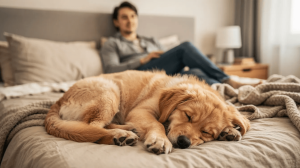
Building a Consistent Puppy Sleep Schedule
1. Choose a Regular Wake-Up Time
Start the day at approximately the same time whenever possible. Take your puppy outside promptly after waking.
2. Alternate Activity and Rest
Young puppies often do best when active periods are followed by quiet time. Training should be brief and appropriate for the puppy’s age and attention span.
3. Provide a Designated Sleeping Space
A properly introduced crate can provide a defined sleeping area, but it is not the only option. A secure exercise pen or puppy-proofed room may also work.
The sleeping area should be:
- Comfortable and appropriately sized
- Away from heavy household traffic
- Free from unsafe bedding or chewable objects
- Quiet enough for uninterrupted rest
- Maintained at a comfortable temperature
4. Create a Bedtime Routine
A simple bedtime sequence might include calm interaction, a final potty trip, and settling in the same sleeping area each night.
Avoid intense play immediately before bed. Do not restrict normal water access unless your veterinarian has provided specific instructions. Instead, provide reasonable potty opportunities based on your puppy’s needs.
5. Adjust the Routine Gradually
As your puppy grows, naps may become shorter or less frequent, and nighttime sleep may lengthen. Adjust wake-up time, bedtime, meals, and potty breaks gradually rather than changing the entire schedule at once.

Helping a Puppy Sleep at Night
Many young puppies cannot initially sleep through an entire night without a potty break. Bladder control develops at different rates, so age-based bladder formulas should not be treated as guarantees.
The Zoetis puppy sleep guide notes that some puppies sleep for four to six hours at a time overnight, while continuous nighttime sleep may not develop until approximately 16 to 20 weeks.
For nighttime potty trips:
- Keep the room dim and interactions quiet.
- Take the puppy directly to the designated potty area.
- Allow enough time to eliminate.
- Offer calm praise.
- Return the puppy to the sleeping area without starting play.
If the puppy wakes crying, first consider whether it needs to eliminate, is uncomfortable, or is genuinely distressed. Persistent crying should not automatically be treated as attention-seeking.
Keeping the sleeping area near your bed during the first few nights may make it easier to hear when the puppy needs to go outside and may help the puppy adjust to being away from its litter.
Should You Schedule Puppy Naps?
Planned quiet periods can help puppies that struggle to settle independently. A nap does not have to occur at the same minute every day, but providing rest after meals, play, socialization, or training can create a predictable rhythm.
Do not use the crate as punishment or force a distressed puppy to remain confined without addressing its needs. Crate training should be introduced gradually and positively.
The medically reviewed PetMD puppy sleep schedule provides additional guidance on crate placement and establishing healthy sleeping habits.
When to Contact Your Veterinarian
Contact your veterinarian if your puppy:
- Is unusually difficult to wake
- Suddenly sleeps much more or less than usual
- Appears weak, painful, or disoriented
- Stops eating or drinking normally
- Has vomiting, diarrhea, coughing, or breathing changes
- Paces, pants, or cannot become comfortable at night
- Cries persistently despite having its needs met
- Experiences a sudden change in behavior or house-training habits
Normal puppy sleep varies, but a sudden change combined with other symptoms should not be dismissed as part of growing up.
How Puppy Training Supports a Daily Routine
Age-appropriate training can help owners build predictable patterns around crate use, potty breaks, calm behavior, and brief obedience sessions. Training should fit around the puppy’s need for rest rather than keeping the puppy awake for long practice sessions.
Off Leash K9 Training of Syracuse publishes several puppy training programs in Syracuse, with eligibility depending on the puppy’s age and the selected format.
Owners can review current training options and program information before choosing a service. No training program can replace veterinary care when a puppy’s sleep changes because of pain or illness.
Getting Started
Track your puppy’s naps, meals, potty breaks, and behavior for several days. Look for patterns rather than trying to follow an inflexible schedule. A consistent routine should support your puppy’s health and make necessary adjustments easier to identify.
Syracuse-area owners who need guidance with puppy routines, crate foundations, potty-training habits, or early obedience can contact a trainer to discuss available programs and age requirements.
Frequently Asked Questions
How many hours should a puppy sleep?
Very young puppies may sleep as much as 18 to 20 hours across a full day. Older puppies generally sleep less, but individual needs vary.
Should I wake my puppy from a nap?
A sleeping puppy can usually be allowed to rest. However, your veterinarian may recommend waking the puppy for meals, medication, or other health-related needs.
What time should a puppy go to bed?
There is no universal bedtime. Choose a time that fits your household, then provide a calm routine and final potty opportunity before settling your puppy.
Why does my puppy become hyper before bedtime?
Evening hyperactivity can be related to overtiredness, insufficient activity, excessive stimulation, hunger, or needing to eliminate. Review the entire routine before assuming the puppy needs more exercise.
Do puppies need nighttime potty breaks?
Many young puppies do. The frequency depends on age, bladder development, feeding and drinking patterns, health, and the individual puppy.
Is a crate required for a puppy sleep schedule?
No. A crate can be useful when introduced properly, but a secure pen or puppy-proofed sleeping area may also provide safe containment and consistent rest.
