

Puppy-proofing your home is one of the most important safety steps to take before bringing a new puppy home. Puppies often explore with their mouths, so a comprehensive puppy-proofing checklist can help you identify and secure potential hazards before they lead to injury or ingestion. Whether you’re welcoming a puppy into a Syracuse apartment or a house with a yard, preparing your living spaces in advance can reduce avoidable risks.
This guide covers indoor and outdoor safety, hazard identification, and room-by-room preparation for young puppies from about 8 weeks through 6 months old. It’s designed for new puppy owners and first-time dog parents who want a clear, actionable plan for preparing their home. Syracuse-area owners dealing with seasonal weather will also find guidance on winter, spring, and summer hazards. For information about local training options, visit Syracuse dog training.
The essentials of puppy proofing include: securing electrical cords, removing toxic plants and foods, installing baby gates to create safe zones, locking away cleaning supplies and medications, and setting up a crate or designated puppy area for times when you cannot actively supervise.
By following this checklist, you can create:
- A safer home environment suited to your puppy’s developmental stage
- A lower risk of preventable poisoning, choking, and ingestion incidents
- A more manageable environment for potty training and house training
- Fewer opportunities for puppies to practice destructive chewing
- Greater peace of mind when your puppy is exploring the home
Understanding Puppy Safety Fundamentals
Puppy-proofing your home involves securing living spaces to reduce risks while young puppies are still developing. Puppies can be highly curious and may investigate objects with their mouths before they have learned appropriate boundaries. Teething can also increase chewing behavior. Creating a safer environment supports training by limiting access to dangerous objects and reducing opportunities to practice unwanted behaviors.
Critical Age Considerations
Puppies between 8 and 16 weeks are developing rapidly and are still learning how to navigate their environment. This age range also overlaps with an important early socialization period. The American Veterinary Society of Animal Behavior identifies the first three months of life as the primary puppy socialization period. AVSAB Puppy Socialization Position Statement
As teething progresses, chewing often increases; permanent teeth generally begin appearing around 4 to 5 months. MSD Veterinary Manual: Dental Development of Dogs. Electrical cords, shoes, socks, and small objects can become dangerous if chewed or swallowed. Foreign-body ingestion can cause choking or intestinal obstruction and may require urgent veterinary care. Close supervision is especially important during the first weeks in a new home.
Early safety and training work best together. Environmental management reduces the number of unsafe choices a puppy can practice, while cues such as “leave it” provide an additional layer of control. Positive-reinforcement training can help owners teach appropriate behaviors without relying on constant correction.
Prevention vs. Correction Approach
Preventing access to hazards is generally safer and simpler than responding after an ingestion or injury. Childproof latches, cord concealers, baby gates, and secure storage can all reduce access to common household risks.
Prevention also reduces opportunities for unwanted behavior to be rewarded. For example, keeping food inaccessible makes it less likely that counter surfing will pay off for the puppy. Environmental management and obedience training can work together, and professional dog training services can provide additional guidance when owners want structured help. Setting up clear boundaries from the beginning makes everyday puppy management easier.
With these fundamentals clear, let’s walk through each area of your home room by room.
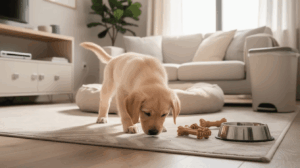
Essential Indoor Puppy Proofing Areas
Systematic, room-by-room puppy proofing eliminates much of the guesswork. Each area of your home can present different risks, so checking spaces methodically makes it less likely that a hazard will be overlooked.
One useful approach is to get down to your puppy’s eye level and look for anything within reach that could be chewed, swallowed, pulled down, or climbed on.
Living Room and Common Areas
The living room is often one of the most-used shared spaces in the home, making it an important area for puppy proofing.
Electrical cords are a serious hazard. Unplug cords when practical, route them behind furniture, and use cord concealers or protective tubing where needed. Chewing a live electrical cord can cause oral burns or electric shock. Cover unused outlets if they are easily accessible to your puppy.
Small objects on low tables and nightstands can create choking or intestinal obstruction risks. Keep coins, rubber bands, paper clips, hair ties, batteries, and other small items securely out of reach. Raise blind cords or use cordless window coverings where possible because dangling cords can create an entanglement hazard.
Remove or restrict access to toxic houseplants. The ASPCA lists plants including sago palm and philodendron as toxic to dogs. Effects vary by plant and exposure and can range from oral irritation or gastrointestinal signs to serious systemic illness. Verify each plant by species rather than assuming it is safe. ASPCA Toxic and Non-Toxic Plant List for Dogs
Kitchen Safety Priorities
The kitchen contains food, garbage, appliances, and household products that can attract a curious puppy. Pay particular attention to lower cabinets and accessible surfaces.
Keep cleaning supplies in high cabinets or behind secured doors. Install childproof latches on low cabinets containing bleach, detergent pods, pesticides, or other chemicals. Store medications securely out of reach; child-resistant packaging is not a substitute for safe storage.
Secure trash cans with locking lids or keep them behind a latched cabinet door. Garbage can contain bones, food wrappers, spoiled food, and other items that may cause injury or illness if swallowed.
Do not feed puppies chocolate, grapes, raisins, onions, garlic, macadamia nuts, or products containing xylitol. The effects vary by substance and can be serious. Keep food securely stored and out of reach. Merck Veterinary Manual: Food Hazards for Pets
Counter surfing can become self-rewarding when a puppy finds food or interesting objects on a surface. Remove access to food, move stools or chairs that provide easier access, and secure appliance cords so a puppy cannot pull an appliance or other heavy object down. Baby gates can also help restrict kitchen access when you cannot actively supervise.
Bedroom and Bathroom Hazards
Bedrooms and bathrooms contain several easily overlooked puppy hazards.
Keep laundry baskets secured or behind closed doors. Socks, underwear, and other fabric items can cause intestinal obstruction if swallowed and may require urgent veterinary treatment. Purses and backpacks can also contain hazards such as xylitol-containing gum, medications, batteries, or coins, so store them out of reach.
In the bathroom, keep toilet lids closed, particularly when cleaning products are being used in the bowl. Keep medications, personal care products, razors, scissors, and other potentially harmful items in secure cabinets or drawers.
Keep windows securely closed or screened where a puppy could otherwise fall or escape.
With your indoor spaces secured, extend the same level of attention to your yard and other outdoor areas.
Complete Outdoor Safety Setup
A carefully prepared home still needs a safe outdoor plan. For Syracuse-area owners, outdoor preparation should include fencing or containment, plants, chemicals, water features, and seasonal weather hazards.
Yard Perimeter and Fencing Assessment
If your puppy uses a fenced yard, inspect the enclosure carefully before allowing access. A secure fence can reduce escape risk, but the appropriate height, spacing, and design depend on the dog’s size, athletic ability, climbing or digging behavior, and the property itself.
- Check fence height and openings. Make sure your puppy cannot jump, climb, squeeze through, or become trapped in openings. Reassess the fence as your puppy grows.
- Repair potential escape routes. Walk the entire perimeter and check for loose boards, damaged sections, holes, and gaps at ground level.
- Check gate latches. Make sure gates close securely and that your puppy cannot easily push, paw, or nose them open.
- Address digging safely. If your puppy digs near the fence, consider a properly installed pet-containment barrier and make sure no exposed wire or sharp edges can cause injury.
- Create supervised play areas. A smaller secure area or puppy pen can help with management, but young puppies should still be appropriately supervised outdoors.
A fence is a useful management tool, but it does not replace supervision.
Toxic Plant and Chemical Removal
Remove toxic plants or prevent your puppy from accessing them. Use the ASPCA’s dog-specific toxic plant database to verify plants by species. ASPCA Toxic and Non-Toxic Plant List for Dogs
| Plant | Main Risk | Possible Signs |
| Sago palm | Severe; potentially fatal | Vomiting, weakness, seizures, liver injury |
| Azalea / Rhododendron | Can be serious | Drooling, vomiting, weakness, abnormal heart rate |
| Daffodil / Tulip bulbs | Toxic; bulbs are especially concerning | Drooling, vomiting, abdominal upset; more serious signs may occur after larger exposures |
| Oleander | Severe; potentially fatal | Drooling, vomiting, abnormal heart rhythm, weakness or collapse |
| Philodendron | Irritant toxicity | Oral irritation, drooling, pawing at the mouth, difficulty swallowing |
Toxicity depends on the exact plant, the part ingested, the amount, and the individual dog. If you suspect ingestion, contact a veterinarian or animal poison-control service rather than waiting for symptoms.
Store pesticides, automotive fluids, and other chemicals securely. Antifreeze containing ethylene glycol can cause life-threatening poisoning and may progress to kidney failure, so clean spills promptly and prevent access to garage or driveway leaks. Pet Poison Helpline: Antifreeze Toxicity in Pets
Weather and Seasonal Considerations
Syracuse’s seasonal weather creates several outdoor safety considerations.
Winter: Ice-melt products can irritate paws and may cause gastrointestinal or electrolyte problems if enough is ingested. Wipe your puppy’s paws after walks and prevent licking of treated surfaces whenever possible. Antifreeze containing ethylene glycol is a much more serious poisoning risk. During extreme cold, limit prolonged exposure and watch for signs that your puppy is becoming uncomfortably cold.
Spring: Daffodils, tulips, and other garden plants can be toxic to dogs. Inspect flower beds and prevent access to bulbs, fertilizers, pesticides, and other lawn or garden products.
Summer: Provide access to shade and fresh water, avoid prolonged exposure to excessive heat, and supervise puppies around pools and other bodies of water. Keeping grass and brush maintained can also reduce exposure to some tick habitats.
Continue supervising your puppy outdoors even as recall improves. Reliable recall is valuable, but it does not replace a secure environment or appropriate supervision.
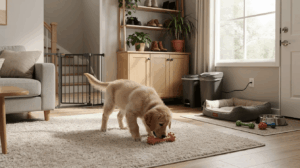
Common Puppy Proofing Mistakes and Solutions
Even careful owners can overlook hazards as a puppy grows. Here are several common puppy-proofing mistakes and how to address them.
Underestimating Puppy Reach and Climbing Ability
Puppies grow quickly, and something that was out of reach earlier may become accessible as your puppy gets taller, stronger, or more confident. Regularly reassess puppy-proofed areas as your puppy develops.
Secure furniture that could tip, including unstable shelving or televisions, and remove small children’s toys or other choking hazards from shared play areas. Keep sharp objects and other dangerous items off low surfaces.
Inconsistent Family Rule Enforcement
Puppies benefit from consistent household routines. If one family member leaves shoes accessible or forgets to latch a gate, the puppy gains another opportunity to practice unwanted or unsafe behavior.
Everyone in the home should follow the same basic safety rules. Visible reminders near doors or problem areas can help reinforce routines such as keeping shoes off the floor, food off accessible surfaces, and gates properly secured.
Delayed Veterinary and Training Professional Setup
Don’t wait for an emergency to establish veterinary care or a training plan. Your veterinarian can discuss vaccinations, microchipping, poison risks, emergency procedures, and other health considerations. Professional training can also help owners establish age-appropriate routines and address emerging behavior concerns.
Use a crate, puppy pen, or other designated safe area when you cannot actively supervise, provided the setup is appropriate for your puppy’s age and needs. Introduce confinement positively and provide appropriate chew toys to redirect normal chewing away from cords, furniture, and personal belongings.
A predictable environment for eating, training, play, and rest can make early puppy management easier.
Conclusion and Next Steps
Thorough puppy proofing creates a safer foundation for everyday routines and training while reducing avoidable household risks. A puppy proofing checklist can help you systematically identify potential hazards before your puppy arrives and reassess them as your puppy grows.
Your immediate action steps:
- Complete a room-by-room sweep, including a floor-level inspection of anything your puppy could reach.
- Gather practical safety supplies such as cord concealers, cabinet latches, baby gates, a crate or puppy pen, secure trash containers, and age-appropriate chew toys.
- Review current puppy training options if you want professional guidance with early routines or obedience.
- Schedule your puppy’s veterinary wellness visit and discuss vaccinations, emergency contacts, poison risks, and other preventive care.
Syracuse currently offers puppy-focused training options for young dogs. Program availability can change, so review the Plans & Pricing page or contact the Syracuse team before booking.
Frequently Asked Questions
How soon should I start puppy proofing my home before bringing my puppy home?
Start puppy proofing before your puppy arrives. Several days to a week can give you time to secure hazards, set up designated areas, and gather supplies, but there is no required minimum timeframe.
What are the most common household items that puppies get into?
Common household hazards include electrical cords, small objects such as coins and rubber bands, cleaning supplies, medications, toxic plants, accessible food, trash, socks, and other items a puppy may chew or swallow.
How can I prevent my puppy from chewing electrical cords?
Route cords out of reach, unplug them when practical, and use cord concealers or protective tubing where needed. Provide appropriate chew toys and redirect your puppy away from electrical cords during supervised time.
Is it necessary to fence my yard for my puppy?
Not necessarily. A secure fence can be very helpful if your puppy uses a yard, but puppies can also have safe outdoor access on a leash or in another secure enclosure with appropriate supervision.
What should I do if my puppy ingests something toxic?
Contact your veterinarian, an emergency veterinary clinic, or an animal poison-control service immediately for guidance. Do not induce vomiting or give a home remedy unless a veterinary professional or poison-control specialist specifically tells you to do so.
How often should I reassess my home for puppy hazards?
Reassess your home regularly as your puppy grows and whenever their mobility, reach, or environment changes. A monthly check can be a useful routine, but additional checks may be needed after household changes or growth spurts.
