
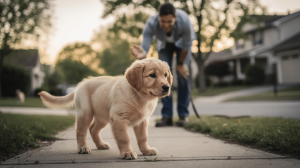
Puppy fear periods are commonly described as developmental stages when a puppy becomes more cautious or reacts strongly to people, objects, sounds, or places that previously caused little concern. A confident puppy may suddenly hesitate near a garbage can, bark at a person wearing a hat, or refuse to walk past a parked vehicle.
The first change in fear-related behavior often overlaps with the early socialization period. Adolescent dogs may also experience temporary increases in caution or sensitivity, although the idea of one universal “second fear period” is less firmly established.
Sudden fear should not automatically be dismissed as a developmental phase. Pain, illness, a frightening experience, incomplete socialization, and environmental changes can produce similar behavior.
This guide explains the usual puppy fear-period timeline, common warning signs, how to respond without forcing an interaction, and when veterinary or professional behavior support may be appropriate. Syracuse-area owners can also review local services from Off Leash K9 Training of Syracuse.
What Are Puppy Fear Periods?
The term “fear period” describes a time when a puppy may become more sensitive to possible threats. The puppy may notice new details in the environment, startle more easily, or hesitate before approaching something unfamiliar.
This increased caution has traditionally been explained as an adaptive part of development. As puppies become more mobile and independent, avoiding unfamiliar situations may help protect them from danger.
However, development does not follow an identical timetable in every dog. Genetics, breed, temperament, early experiences, health, and the environment can all affect when fear-related behavior appears and how intense it becomes.
Research into breed-related differences in fear-related avoidance found that behavioral development varied among the breeds studied. This means age ranges should be treated as general guides, not diagnostic rules.
When Do Puppy Fear Periods Occur?
Early Fear Development
The first commonly cited puppy fear period occurs at approximately 8 to 11 weeks. This overlaps with an important socialization stage and often coincides with major changes:
- Leaving the mother and littermates
- Moving into a new home
- Meeting unfamiliar people
- Beginning veterinary visits
- Experiencing car rides
- Learning household routines
- Encountering new surfaces, sounds, and environments
The American Veterinary Society of Animal Behavior’s puppy socialization guidance identifies the first three months as an important opportunity for puppies to form positive associations with people, animals, environments, and everyday experiences.
Socialization should continue during this stage, but exposure must remain controlled and appropriate for the individual puppy. Socialization is not about forcing a puppy to interact with as many things as possible.
Adolescent Fearfulness
Many trainers and puppy-development guides describe a second fear period between approximately 6 and 14 months. Some dogs may become more vigilant, reactive, or hesitant during adolescence. Larger breeds also mature more slowly, so behavioral changes may appear later.
However, research has not established one precise adolescent period that every dog experiences. Adolescent fearfulness may occur in episodes, may be associated with a particular event, or may not be obvious at all.
Owners should focus on the dog’s actual behavior rather than assuming that every new fear will disappear because the dog is within a particular age range.

Signs Your Puppy May Be Afraid
Fear is not always dramatic. Some puppies bark or retreat, while others become very still.
Possible fear and stress signals include:
- Freezing or refusing to move
- Crouching or lowering the body
- Tucking the tail
- Moving behind the owner
- Attempting to escape
- Refusing treats
- Lip licking or repeated yawning
- Showing the whites of the eyes
- Trembling
- Pacing or panting
- Barking, growling, or lunging
- Becoming unusually clingy
- Avoiding a particular room, person, or object
The VCA guide to canine stress signals explains that stress may appear through changes in posture, movement, vocalization, and normal behavior.
A puppy that freezes and stops accepting food may be highly uncomfortable even if it is not barking.
How to Respond to Sudden Puppy Fear
Step 1: Stop Moving Toward the Trigger
Do not drag, carry, lure, or push your puppy closer to something it fears. Forced exposure may increase distress and create a stronger negative association.
Pause and identify what appears to be causing the reaction.
Step 2: Create More Distance
Move far enough away that your puppy can begin to relax. Useful signs of reduced stress include:
- Taking food
- Looking away from the trigger
- Sniffing the ground
- Responding to a familiar cue
- Moving with a loose body
- Choosing to explore
Distance is part of training, not avoidance or failure.
Step 3: Allow Choice
Let the puppy decide whether to observe, move away, or approach. Do not allow strangers to reach over the puppy, corner it, or insist on physical contact.
If the puppy chooses to investigate, keep the leash loose and avoid moving closer faster than the puppy is comfortable.
Step 4: Build a Positive Association
When your puppy notices the trigger from a comfortable distance, offer food, play, or calm praise. The goal is for the trigger to predict something pleasant without requiring the puppy to approach it.
If the puppy will not eat or play, increase the distance or end the session.
Step 5: Keep Sessions Brief
A successful session may last only a few minutes. Stop while your puppy is still comfortable instead of waiting for a fearful response.
Progress should be measured by relaxed behavior, not by how close the puppy gets to the trigger.

Can You Comfort a Frightened Puppy?
Calm reassurance does not create fear. Fear is an emotional response, not deliberate misbehavior.
If your puppy seeks contact, it is reasonable to speak gently, provide space, or allow the puppy to stand near you. Remain calm and avoid restraining the puppy or becoming highly animated.
Comfort should help the puppy feel secure while you move away from the trigger. It should not be used to hold the puppy in a frightening situation.
Common Fear-Period Situations
Refusing to Walk
A puppy may stop, pull backward, or attempt to return home when it sees an unfamiliar object or hears a new sound.
Do not drag the puppy forward. Increase distance, choose a quieter route, and reward voluntary movement. Use a secure harness or collar so the puppy cannot escape if startled.
Barking at People or Dogs
Barking and lunging can be attempts to make a frightening person or animal move away.
Cross the street, turn around, or move behind a visual barrier. Reward the puppy for looking back at you or disengaging from the trigger. Avoid forced greetings.
Fear of Household Objects
Vacuum cleaners, fans, garbage cans, stairs, umbrellas, or unfamiliar decorations may suddenly cause hesitation.
Begin with the object inactive and far away. Reward calm observation. Change only one element at a time, such as distance, movement, or sound level.
Fear at the Veterinary Office
A puppy may hesitate at the entrance, shake in the waiting room, or resist handling.
Ask the veterinary team whether brief social visits are available. A visit involving treats, calm exploration, and no procedure can help create a different association with the building.
The VCA socialization and fear-prevention guide recommends removing a frightened puppy from an overwhelming situation and arranging professional guidance when needed.

Training During a Fearful Phase
Continue short, familiar exercises in comfortable environments. Lower the difficulty temporarily and reward engagement rather than demanding perfect performance.
Appropriate activities may include:
- Name recognition
- Hand targeting
- Short recall practice indoors
- Finding scattered treats
- Relaxing on a mat
- Simple food puzzles
- Walking across safe, stable surfaces
- Brief handling paired with food
Avoid using leash corrections, intimidation, or punishment to suppress a fear response. Stopping the visible reaction does not necessarily make the puppy feel safer.
Do not test off-leash reliability when the puppy is unusually fearful or easily startled. Use a secure leash or long line in appropriate areas until the dog is responding reliably again.
When Fear May Be More Than a Developmental Phase
Contact your veterinarian if fear begins suddenly and is accompanied by:
- Pain or sensitivity to touch
- Changes in appetite
- Lethargy
- Difficulty seeing or hearing
- Changes in movement
- Disorientation
- Sleep disruption
- House-training regression
- Irritability or aggression
Medical conditions can contribute to new fear or behavioral changes.
Professional behavior guidance is also appropriate when:
- Fear continues to intensify
- The puppy is afraid in several environments
- Recovery takes a long time after each trigger
- The puppy regularly refuses food outside the home
- Barking or lunging is becoming more frequent
- The puppy attempts to bite
- Fear interferes with walks, veterinary care, or normal household life
- The owner does not feel safe managing the behavior
Fear involving multiple triggers, severe reactions, or aggression may require help from a veterinarian, veterinary behaviorist, or qualified trainer experienced with fear and reactivity.
Choosing Professional Support
Training recommendations should consider the puppy’s age, health, bite history, triggers, and ability to recover after a frightening event.
Off Leash K9 Training of Syracuse publishes several puppy training options in Syracuse. Program suitability depends on the puppy’s age, behavior, and training needs.
Owners can review current program information and eligibility before selecting a service. A puppy experiencing sudden or severe fear should receive veterinary attention when a health problem may be contributing.
How a Confidence-Building Plan Works
A practical plan generally follows these steps:
- Identify the trigger. Record the person, object, sound, location, or event associated with the behavior.
- Establish a comfortable distance. Begin where the puppy can observe without freezing, escaping, or refusing food.
- Pair the trigger with something positive. Use food, play, or calm interaction.
- Allow the puppy to choose. Do not require physical contact or continued approach.
- End before the puppy becomes overwhelmed. Short successful sessions are more useful than long confrontations.
- Track changes. Record distance, body language, recovery time, and new triggers.
- Adjust the plan. Reduce difficulty when the puppy struggles and seek help when progress stalls.
The objective is not to expose the puppy to everything immediately. It is to create safe, manageable experiences that support confidence over time.
Get Help With Your Puppy’s Training
If your Syracuse-area puppy has become unusually fearful, reactive, or difficult to manage, contact a trainer to discuss the puppy’s age, behavior history, and available training options.
A trainer can explain whether the concern is suitable for a puppy program or whether veterinary or specialized behavior guidance should come first.
Frequently Asked Questions
At what age do puppy fear periods happen?
The first commonly cited period occurs around 8 to 11 weeks. Temporary fearfulness is also frequently reported during adolescence, often between 6 and 14 months, but not every dog follows the same timeline.
How long does a puppy fear period last?
There is no guaranteed duration. Some reactions disappear within days, while others continue or require behavior modification. Persistent or worsening fear should be evaluated instead of waiting for an arbitrary deadline.
Should I stop socializing my puppy during a fear period?
No, but socialization should remain controlled and positive. Reduce the intensity of experiences and allow the puppy to observe from a comfortable distance.
Should I make my puppy face what it fears?
No. Forced exposure may increase fear. Create distance, allow choice, and pair the trigger with something the puppy enjoys.
Can I pick up or comfort a scared puppy?
Calm comfort is appropriate if the puppy seeks it and handling can be done safely. Comfort should be combined with leaving or reducing the intensity of the frightening situation.
Why is my puppy suddenly afraid of familiar objects?
Developmental changes may alter how a puppy responds to familiar surroundings. Pain, illness, a recent frightening experience, or environmental changes can also cause sudden fear.
When should I contact a veterinarian?
Contact your veterinarian when fear appears suddenly, intensifies, is accompanied by physical or behavioral changes, or interferes with eating, sleeping, movement, or normal daily life.
