
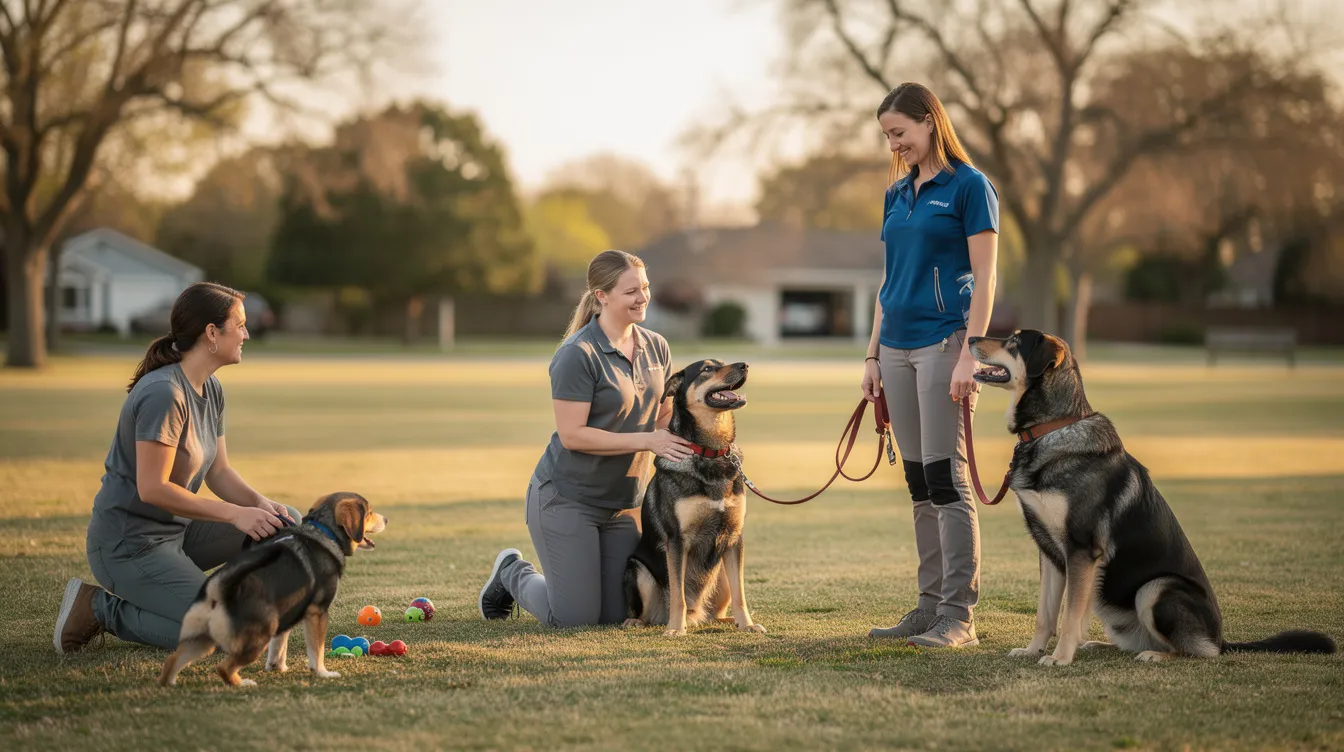
Basic obedience training typically takes 4–6 weeks of consistent practice, but how long it takes to fully train a dog depends on what you’re actually trying to achieve. A puppy learning to sit on command is a vastly different project than rehabilitating a reactive dog or building reliable off-leash recall in public settings.
This guide covers realistic training timelines for puppies and adult dogs across every major training goal-from basic commands and potty training to behavioral modification and advanced off-leash reliability. Whether you’re a first-time pet parent with a young puppy or working through behavior problems with an older dog, these benchmarks reflect what professional dog trainers see in practice, not what marketing promises.
The simple answer: obedience training typically takes 4–6 weeks to complete for foundational skills, while complete behavioral transformation-addressing reactivity, aggression, or separation anxiety-can take 3–6 months of intensive, structured work. Reliable obedience usually takes 3 to 6 months of continuous reinforcement across different locations and distraction levels.
Here’s what you’ll take away from this guide:
- Realistic general timeline expectations for every major training goal
- The specific factors that make training faster or slower for your individual dog
- How different training program formats compare in duration and results
- When to seek professional help versus continuing on your own
Understanding Dog Training Fundamentals
Dog training covers a wide spectrum-from teaching a pup to sit on cue to rebuilding the emotional response of a fearful, aggressive animal. Understanding where your goals fall on this spectrum is the first step toward setting accurate expectations. Training is an ongoing process rather than a fixed course with an end date; dogs don’t “graduate” and stay trained forever without ongoing reinforcement.
Training techniques should revolve around building trust and communication initially. Most modern dog training uses operant conditioning-often combined with classical conditioning-where variables like reward timing, reinforcement schedules, and how well behaviors transfer across environments determine how quickly your dog learns and retains new behaviors.
Basic Obedience Training
Basic obedience covers the foundational skills every dog needs: sit, down, stay, come, heel, and loose leash walking. These basic commands form the communication framework between you and your dog.
Basic obedience training takes about 4–6 weeks when practiced consistently with short sessions multiple times per week. During this window, most dogs develop moderate reliability in controlled, low-distraction environments. Puppies can begin training as early as 8 weeks old, meaning you can start building these foundational skills the moment your new dog comes home.
This foundation isn’t just about obedience-it’s about relationship. A dog that understands what you’re asking and trusts your guidance becomes a dog that’s safer, calmer, and more confident in everyday life.
Behavioral Modification Training
Behavioral modification addresses deeper issues: aggression toward people or other dogs, reactivity on leash, separation anxiety, excessive barking, resource guarding, and fear-based responses. Unlike basic training, which teaches new behaviors, behavioral work changes emotional responses-how the dog feels about triggers, not just what it does.
Behavioral training can take 3–6 months to address issues meaningfully, using structured desensitization and counter-conditioning. Dogs with a history of trauma may take longer to train, as the emotional foundation must be rebuilt before reliable behavior change is possible. Professional training may be necessary for serious behavior problems, particularly aggression cases where safety is a concern.
This is precisely why behavioral training takes longer than teaching commands-you’re not just asking a dog to learn a new action; you’re reshaping how it processes and responds to the world.
Training Timeline Breakdowns
Every dog’s developmental stage demands a different approach and pace. The timelines below reflect what you should expect with consistent practice and, ideally, professional guidance. Training involves distinct stages that align with the dog’s developmental stages, so a cookie-cutter timeline rarely holds up.
Puppy Training (8 Weeks – 6 Months)
Young puppies are remarkably adaptable. Puppies learn faster than older dogs due to their neural plasticity, but their shorter attention spans mean daily training sessions should stay brief-5 to 10 minutes per session.
House training: Potty training commonly takes 2 to 6 months. Most puppies achieve full reliability around 4–6 months, though small breeds sometimes take up to 12 months. Puppies under 12 weeks often can’t hold their bladder longer than 1–2 hours, while by 5–6 months they can manage 4–6 hours during the day.
Socialization and bite inhibition: The 8–16 week window is critical for socialization. Socialization is critical and should occur during the early weeks of a puppy’s life-exposure to diverse people, dogs, surfaces, and sounds during this period reduces fear and reactivity later. Bite inhibition training begins here as well.
Foundation obedience: Puppies typically learn foundational skills in 3 to 4 months. Expect 6–10 weeks to see consistency in sit, down, indoor recall, and loose leash walking in low distractions. A puppy training program structured around these developmental windows makes the most of your pup’s natural learning capacity.
Adult Dog Training (6+ Months)
Adult dogs bring different advantages and challenges. They can maintain focus for longer periods but may have established habits that slow new learning. Older dogs may take longer to unlearn bad habits due to prior learning experiences.
Basic obedience: For adult dogs with minimal prior training, expect 4–8 weeks to demonstrate reliability under moderate distractions. Dogs with previous training history often progress faster. Intermediate training typically requires 4–6 months to build reliable responses across varied environments.
Behavioral modification: Addressing reactivity, fear, or aggression in adult dogs generally requires 3–6 months of consistent, specialized work. The first 1–2 weeks are typically assessment-establishing safety protocols, identifying triggers, and building a tailored plan. For aggression and reactivity cases, ongoing management may be necessary indefinitely.
Off-leash reliability: This is where most people underestimate timelines. Full off-leash recall in multiple environments with real distractions typically takes 3–6 months for dogs without prior recall training. A reactive dog or one with high prey drive may need 6–12 months. Advanced training can extend from 6 months to a year depending on the complexity of environments and the dog’s breed characteristics.
Specialized Training Programs
Board and Train programs: Board and train duration depends on goals. Obedience-only programs typically run 2–4 weeks for intensive behavioral transformation. Programs addressing emotional or behavioral rehabilitation run 4–8 weeks, sometimes longer for severe cases. High-quality programs include thorough owner hand-off sessions to ensure results transfer home.
Private lesson series: Typically organized as 6–12 sessions over 2–3 months, with the trainer coaching both dog and owner. Behavior modification or off-leash work may need more frequent follow-ups and higher commitment to home practice.
Therapy dog training: Preparing a therapy dog requires solid basic and advanced obedience plus extensive socialization in public settings. Service dog training typically requires 18 to 24 months due to the precision and reliability demanded across high-stress situations.
Aggression rehabilitation: Dogs with aggression issues can show initial improvements within weeks of consistent work, but full rehabilitation often spans 6–12 months. This is a long-term commitment where maintenance and management remain part of the dog’s life going forward.
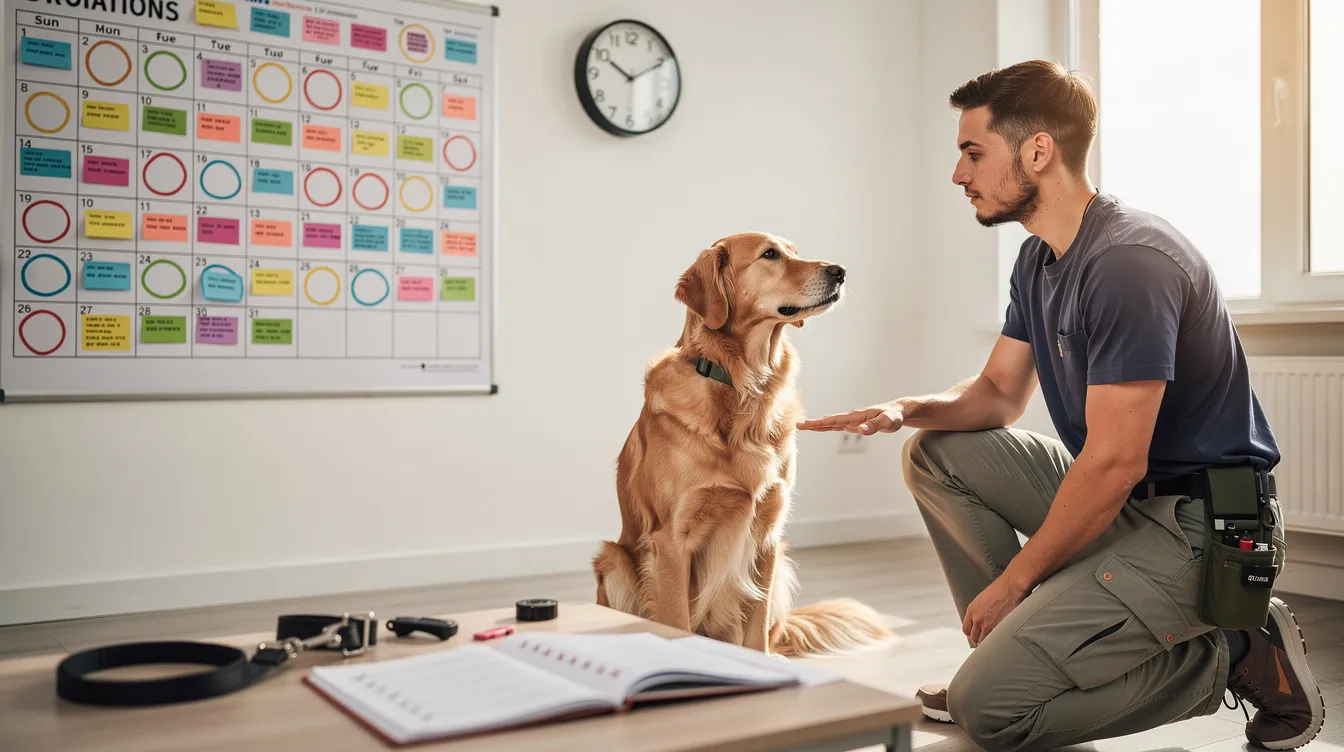
Factors That Influence Training Duration
No two dogs learn at the same pace. Understanding the many factors that affect your timeline helps you set realistic expectations rather than chasing arbitrary deadlines.
Dog-Specific Factors
A dog’s age, breed, history, and personality all shape how quickly the training process unfolds:
- Age and developmental stage: A dog’s developmental stage matters enormously. Puppies have shorter attention spans than adult dogs but absorb new behaviors quickly. Adolescent dogs (6–18 months) often test boundaries and show regression despite previous training. Puppies can begin formal training sessions as early as 8 weeks.
- Breed characteristics and energy level: Some breeds are easier to train due to their genetics and working background. A border collie or German Shepherd bred for handler responsiveness will often pick up specific skills faster than independent-minded hounds or terriers. A dog’s breed influences drive, prey instinct, and natural focus-all of which affect recall reliability and distraction resistance.
- Previous training history: A dog’s ability to learn new behaviors is shaped by past experiences. Dogs that have had structured, positive experiences with training adapt faster. Dogs with no prior training or negative training history need more time to build trust and understand the learning framework.
- Individual temperament and motivation: Food-motivated dogs often respond better to training, while toy-driven or attention-seeking dogs may need different reinforcement strategies. Each dog brings a unique combination of drive, sensitivity, and confidence that the trainer must account for.
Training Environment Factors
The environment influences a dog’s ability to learn commands reliably. Here’s how contextual factors affect speed:
| Factor | Faster Progress | Slower Training |
|---|---|---|
| Consistency | Daily practice sessions, 10–15 minutes | Sporadic, irregular training routines |
| Method | Professional guidance with positive reinforcement techniques | DIY without structure or clear methods |
| Distractions | Training environments gradually increase in complexity | Overwhelming environments from day one |
| Household | All family members use consistent commands | Mixed messages and conflicting cues from family |
| Session structure | Short, frequent training sessions | Infrequent, long sessions that exceed attention span |
Dogs learn faster when training is consistent and regular. Inconsistent training slows down a dog’s learning process dramatically-a 2011 study with Beagles found that dogs trained 1–2 times per week in focused single sessions actually showed better acquisition than those trained daily in clustered back-to-back sessions. Short, frequent training sessions are more effective than long ones. Quality and spacing matter more than sheer volume.
Reinforcing commands in varied settings is necessary for reliable obedience. A dog that sits perfectly in your kitchen but ignores you at the park hasn’t been proofed-the behavior hasn’t generalized across environments. Progressive proofing in different locations separates a dog that understands commands contextually from one that’s fully trained in real-world conditions.
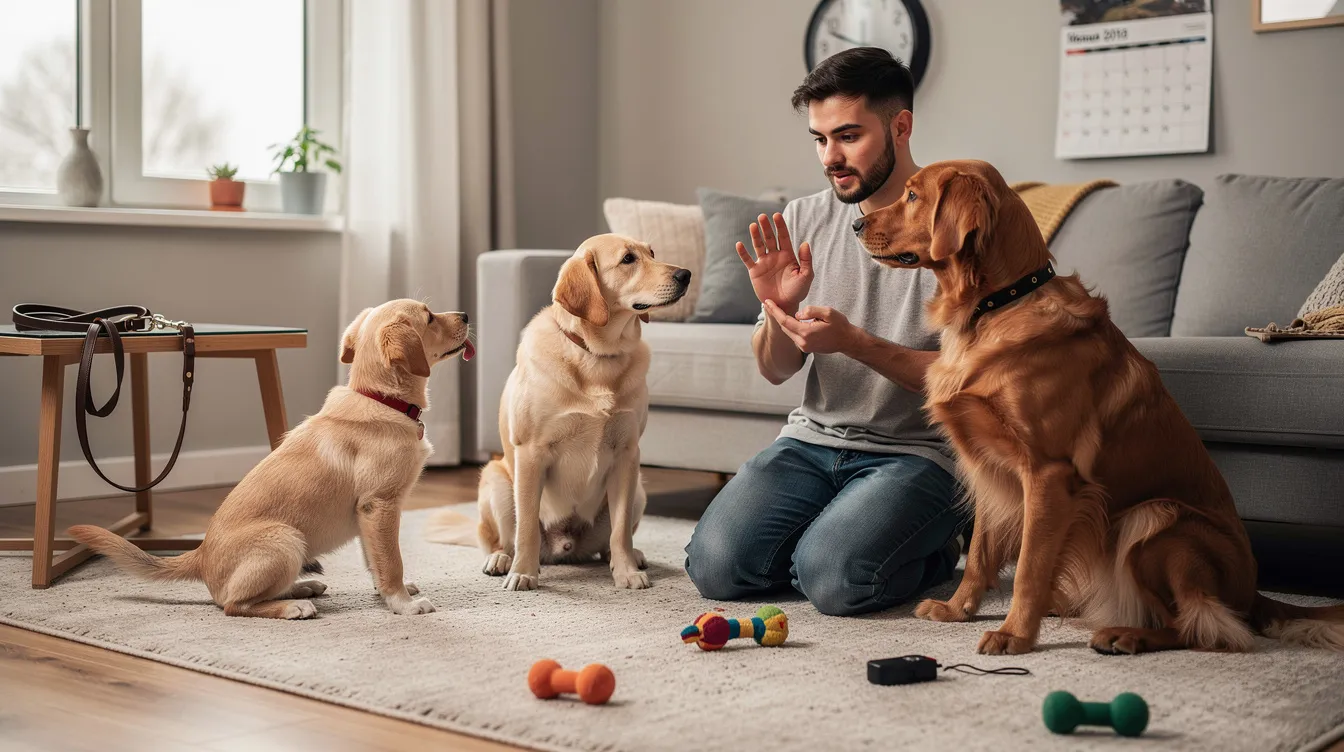
Common Training Challenges and Solutions
Even with the best plan, expect obstacles. Here’s how the most common challenges extend training timelines-and how to overcome them.
Inconsistent Practice Between Sessions
The single biggest factor that slows training: pet owners who don’t practice between formal training sessions. Most of the time required to solidify training-often over 50%-happens at home through daily repetition and environmental management.
Solution: Establish daily 10–15 minute training routines and involve all household members in using consistent commands and reward timing. Positive reinforcement encourages dogs to repeat desired behaviors, but only if it’s applied consistently by everyone the dog interacts with.
Plateau in Learning Progress
After initial rapid gains, most dogs hit a plateau where further progress stalls. This is a normal part of how a dog learns-not a sign of failure. The dog may have mastered behaviors in familiar contexts but struggles to transfer them to new situations.
Solution: Increase motivation with higher-value rewards, change training locations to challenge generalization, or seek professional guidance from experienced handlers who can identify what’s actually stalling progress. Sometimes what looks like a plateau is actually the dog needing a different approach to a specific skill.
Regression During Adolescence (6–18 Months)
Adolescence is when many pet parents feel their young dog has “forgotten everything.” Hormonal changes, increased awareness of the environment, and a natural drive to test boundaries cause previously reliable behaviors to fall apart. This phase catches most people off guard.
Solution: Maintain consistent boundaries, increase supervision, and treat this as a temporary but important phase. Consider board and train programs for intensive reinforcement during the most difficult periods. Refresher sessions with a professional can help bridge the gap between what the dog knew and what adolescence disrupted. This is not the time to give up-it’s the time to double down on structure.
Conclusion and Next Steps
Training is a lifelong process-not a box you check and move on from. While basic training takes 4–6 weeks to establish and most dogs show meaningful behavioral improvement within 3–6 months of consistent work, maintaining a good dog requires ongoing reinforcement throughout the dog’s life.
Here’s how to move forward:
- Assess your dog’s current level: Identify whether you’re starting from zero, building on existing basics, or addressing specific behavior problems
- Set realistic timeline expectations: Use the benchmarks in this guide as starting points, then adjust for your dog’s age, breed, temperament, and history
- Consider professional evaluation: For complex issues-aggression, severe reactivity, separation anxiety-a professional assessment saves time and prevents escalation
- Commit to consistent practice: Daily short sessions at home are non-negotiable regardless of what training program you choose
The difference between pet owners who see fast results and those who struggle for months usually isn’t the dog-it’s the consistency of the human. Whether you’re working with a puppy jump start program or tackling basic and advanced obedience, the training you put in at home determines how quickly your dog progresses.
Additional Resources
Training readiness by age group:
- 8–16 weeks: Socialization, bite inhibition, name recognition, early sit/down, potty training foundations
- 4–6 months: Basic obedience, loose leash walking, recall in low distractions, reliable house training
- 6–12 months: Intermediate obedience, distraction proofing, group classes for socialization with other animals
- 12+ months: Advanced off-leash work, agility training, therapy dog preparation, specialized skill development
Signs you need professional help rather than DIY training:
- Aggression toward people, other dogs, or other animals
- Fear-based behavior that worsens despite your efforts
- Excessive barking or destructive behavior that doesn’t respond to basic training methods
- Any situation where safety is a concern for the dog, family members, or the public
What to look for in qualified trainers:
- Transparent training methods with willingness to explain their approach
- Experience with your dog’s specific issues, not just general obedience
- Progress tracking with measurable benchmarks rather than arbitrary calendar-based programs
- Owner involvement built into the program-any trainer who says they’ll “fix” your dog without teaching you how to maintain results should raise a red flag
For Syracuse area plans and pricing, evaluate programs based on your specific goals rather than price alone. The right program matched to your dog’s needs will always deliver better value than the cheapest or most convenient option.
