
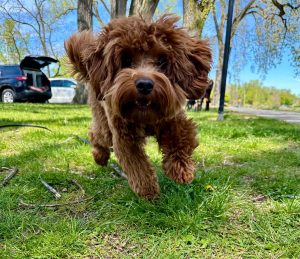
To teach a puppy their name, start in a quiet room and pair the name with something your puppy enjoys. As they begin responding, say the name once, reward a glance or head turn toward you, and gradually practice in other settings. Keep sessions brief and progress at your puppy’s pace rather than expecting a reliable response by a particular day.
This guide focuses on young puppies, though older dogs can also learn a new name through positive associations and practice. Whether you’re raising a puppy in Syracuse, NY, or elsewhere, the goal is to make their name a useful attention cue. Significant fear, aggression, or concerns about hearing require individual professional guidance.
What Does It Mean for a Puppy to Know Their Name?
For this exercise, name recognition means your puppy turns their head or directs attention toward you when you say their name. They do not need to stare into your eyes or come to you. An attention response can support later training, but recall and other cues must be taught separately.
The first stage builds an association between the name and a reward. The next stage reinforces a specific behavior: turning toward you after hearing the name. These stages involve both associative learning and reinforcement.
Guide Dogs for the Blind’s name-training guidance similarly begins by pairing the puppy’s name with food and positive attention before testing their response.
Look for comfortable, repeatable responses in the setting where you are practicing. A puppy who responds indoors but struggles outside needs more practice at an easier outdoor level, rather than being labeled unreliable.
Name recognition does not guarantee recall or safety around hazards. Continue using doors, gates, leashes, and supervision to prevent access to roads or unfamiliar animals.
Choosing a Name and Preparing to Train
Pick a Name You Can Use Consistently
Choose a name you can say clearly and use consistently. A short name can be convenient, but a longer name does not prevent learning. Avoid a name that sounds very similar to a frequently used cue or another pet’s name when possible.
Agree on one main name during initial practice so the exercise stays clear. Dogs can learn nicknames too, but introduce them consistently rather than expecting an unfamiliar word to work immediately.
An adopted dog can learn a new name using the same positive approach.
Choose a Quiet Setting and Suitable Rewards
Start in a quiet room with minimal distractions. Turn off the TV and give your puppy enough space to move comfortably.
Practice when your puppy is awake, comfortable, and interested in interacting. There is no universally best time of day. You can use part of their normal food allowance if they find it rewarding.
Prepare tiny, soft rewards your puppy can eat easily, plus a comfortable harness or flat collar and a leash for outdoor practice. Account for training food in the daily diet. WSAVA’s guidance on feeding treats recommends that treats and other extras generally provide no more than 10% of daily calories.
Keep Sessions Brief
Start with a few repetitions, often taking less than a minute, and offer another brief opportunity later if your puppy remains interested. Session length should follow the puppy’s engagement rather than a fixed attention-span rule.
Pause if your puppy repeatedly turns away, avoids you, becomes restless, or seems uncomfortable. These behaviors need context; a yawn or sniff alone does not diagnose stress. You do not need to insist on one final successful repetition before stopping.
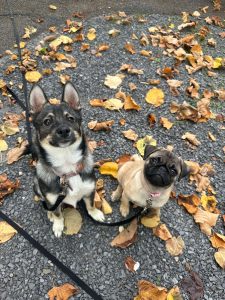 Step-by-Step: How to Teach a Puppy Their Name
Step 1: Pair the Name With Rewards
Begin by giving the name a positive meaning before expecting a response.
- Sit or stand close to your puppy in a quiet room.
- Say their name once in a friendly tone.
- Immediately offer a small reward, even if they have not looked at you.
- Begin with a few repetitions and stop while your puppy remains comfortable.
- Repeat during another brief opportunity later in the day.
Pause between repetitions rather than saying the name repeatedly without a break. Do not add “Sit” or “Come” during this stage.
Step 2: Reward a Head Turn or Glance
When your puppy begins anticipating something pleasant after hearing their name, start rewarding attention.
- Wait until your puppy is looking slightly away without being absorbed in another activity.
- Say their name once.
- Reward a glance or head turn toward you promptly.
- Pause before the next repetition.
A familiar marker word such as “Yes!” or a clicker can identify the response you want, but neither is required. Promptly delivering the reward after a head turn or glance can also work.
Keep the reward out of view until the puppy responds so the exercise does not depend on seeing food first. Best Friends Animal Society’s name-training guide also describes moving from positive name associations to rewarding attention.
If your puppy does not respond, pause and make the next attempt easier. Move closer, reduce distractions, or return to name-and-reward pairings.
Step 3: Add Distance and Other Rooms
Move a few steps away while keeping the environment quiet.
Say the name once and reward your puppy for turning toward you. You can walk over to deliver the reward or gently toss it within easy reach.
You are still asking for attention, not requiring the puppy to cross the room. Practice in another familiar room once the exercise is comfortable.
Change one thing at a time. Adding distance, a new location, and a moving distraction together can make the task unnecessarily difficult.
Step 4: Play a Family Name Game
Begin with two people a short distance apart. One person says the name once and rewards the puppy for turning toward that person. The other person waits until the reward is finished before taking a turn.
Keep rewards out of view until the puppy responds, and avoid calling simultaneously. Supervise children and keep the game calm.
The aim is for your puppy to notice who is speaking, rather than race between people holding visible food.
Taking Name Training Outside
Outdoor settings introduce new distractions, so make the exercise easier when changing locations. Start in a quiet, secure area away from vehicles and unfamiliar dogs, with your puppy wearing a comfortable harness and leash.
Stay close, reward a glance toward you, and increase difficulty gradually. Ask your veterinarian which outdoor settings are appropriate for your puppy’s vaccination status and local disease risks.
Use the leash for safety without pulling the puppy toward you. A leash limits movement; it does not teach attention by itself.
Add Mild Distractions Gradually
Start with something your puppy can notice without becoming overwhelmed, such as a family member walking at a distance.
If responses become less consistent:
- Move farther from the distraction.
- Reduce the distance between you and your puppy.
- Use a reward they value more.
- Return to a quieter setting.
Avoid teasing the puppy with an inaccessible toy or repeatedly calling while they are focused on something else.
Practice During Suitable Walks
When your puppy is comfortable with walks, practice an occasional name response during quiet moments. Reward a glance toward you, then allow normal sniffing and exploration to continue.
You can use the name to gain attention before a familiar cue such as “Let’s go.” If your puppy is already attending to you, there is no need to say their name before every instruction.
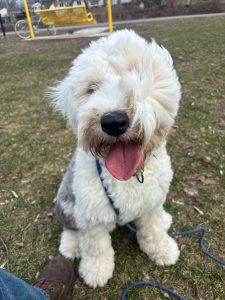 Common Mistakes and How to Fix Them
Using the Name in an Angry Tone
Repeatedly pairing a name with scolding can make the puppy hesitant to respond.
Use a calm, friendly tone and rebuild positive associations through easy name-and-reward repetitions. Manage unwanted behavior with supervision, barriers, and appropriate alternatives rather than startling the puppy with a clap. There is no fixed reset period.
Repeating the Name Without a Response
Repeating the name without a response can make the cue less clear. A missed response may mean the setting is too difficult or the association needs more practice.
Pause, move closer, or reduce distractions before trying again. Reward attention if it occurs, then make the next repetition easier. If you use another prompt, recognize that the puppy responded to that help rather than to the name alone.
Increasing Difficulty Too Quickly
A busy sidewalk may be much harder than a familiar living room.
Return to an easier setting or increase distance from the distraction. Build comfortable responses before increasing difficulty again. Improvement in one location does not guarantee the same response everywhere.
Requiring Direct Eye Contact
A head turn or brief glance is enough for this exercise. Do not withhold the reward because your puppy looks toward your body instead of directly into your eyes.
The goal is comfortable attention, not a prolonged stare.
Moving From Name Recognition to Recall
Teach recall as a separate behavior.
Once your puppy comfortably turns toward you after hearing their name:
- Begin indoors at a short distance.
- Say the name if you need their attention.
- Give a separate recall cue, such as “Come.”
- Reward when your puppy reaches you.
If the puppy looks toward you but does not approach, they have completed the name-response part. Make the recall exercise easier rather than treating the head turn as a failure.
Hide-and-seek belongs to this later recall stage. Begin with a visible person, then introduce an easy doorway hiding place only when the puppy is comfortable with the game. Avoid making a young puppy search in distress.
Continue using secure spaces and appropriate leashes. Name recognition alone does not establish off-leash readiness.
A Simple Progress Checklist
Track the setting, distraction level, and whether your puppy responded without help. Use that record to decide whether to repeat the same level or make the next session slightly harder.
| Check | What to look for |
| Quiet room | A comfortable head turn or glance after hearing the name |
| Food out of view | Attention without needing to see a treat first |
| Another room | A response in a second familiar setting |
| Another person | Attention directed toward the person who spoke |
| Quiet outdoor area | A response at close range while safely leashed |
| Mild distraction | Attention without repeated prompts or signs of discomfort |
These are practice goals, not a deadline or a safety certification.
When to Seek Professional Help
Seek individual help if your puppy remains confused in easy settings, appears frightened during training, or you are unsure how to adjust the exercise.
If they also fail to respond to everyday sounds, contact your veterinarian rather than assuming a training problem. UC Davis explains veterinary hearing assessment, which may be appropriate when hearing concerns arise.
Off Leash K9 Training of Syracuse offers private training and puppy training options. Discuss your puppy’s age, goals, and suitability with the team; do not assume every program includes name recognition or off-leash work.
If you would like help choosing suitable puppy training in Syracuse, call 315-401-0045 or contact the team for a free phone consultation.
Frequently Asked Questions
How long does it take a puppy to learn their name?
There is no fixed deadline. Early recognition in a quiet room and consistent attention around distractions are different stages, so increase difficulty according to your puppy’s responses.
Do I need a clicker to teach a puppy their name?
No. A familiar marker can help identify the response, but promptly rewarding a head turn or glance can also work.
Should I say my puppy’s name before every cue?
No. Use the name when you need attention; if your puppy is already focused on you, give the familiar cue directly.
