
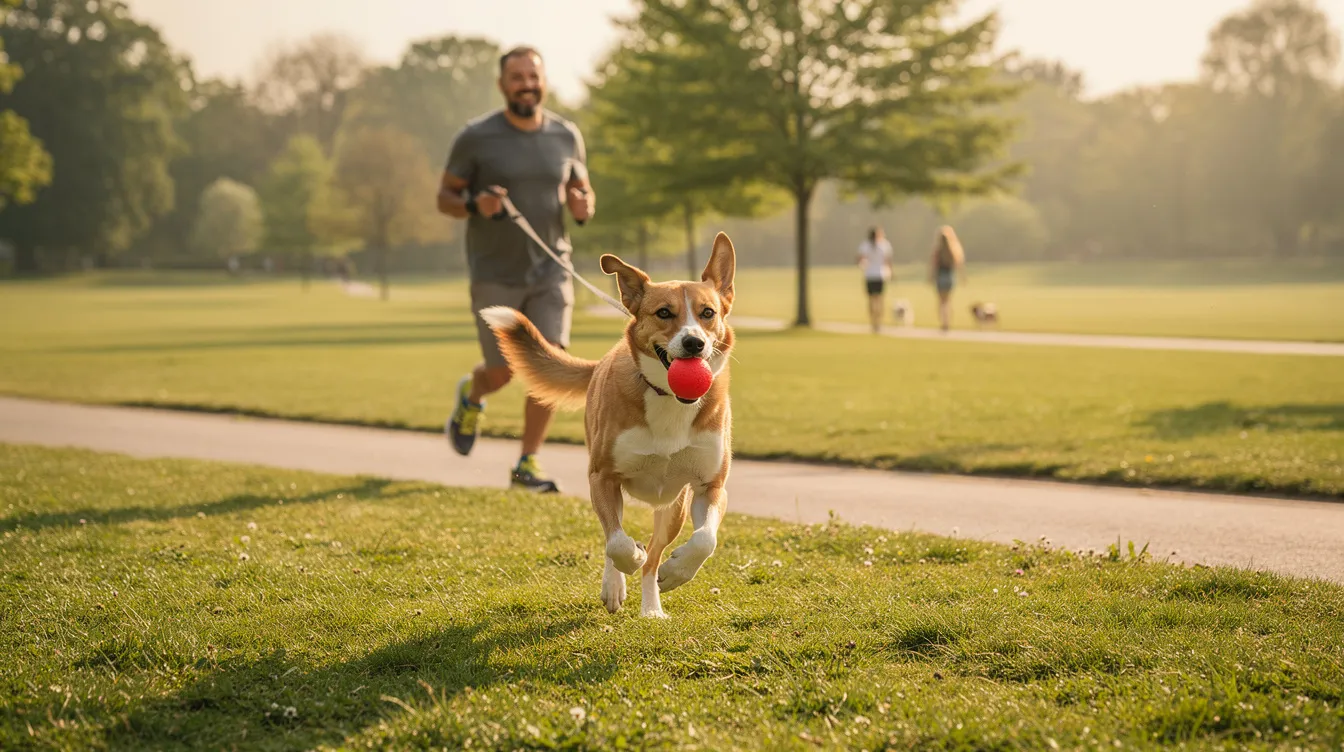
Dogs need 30 minutes to 2 hours of exercise daily, with the exact amount determined by breed, age, energy level, and health status. A Border Collie with pent-up energy and a senior Bulldog recovering from a walk require fundamentally different routines – and understanding that difference is the foundation of responsible ownership.
This guide covers everything dog owners need to know about physical exercise, mental stimulation, and breed-specific activity requirements. Whether you’re in the Syracuse area dealing with icy January sidewalks or simply trying to figure out why your dog is chewing through baseboards, these recommendations will help you build a sustainable exercise routine grounded in veterinary science and professional training experience. The advice here applies to any owner seeking clarity, but it’s especially relevant for those managing high-energy breeds or dogs with behavioral challenges that stem from inadequate activity.
Why does this matter so much? Exercise isn’t just about keeping your dog physically healthy – it directly shapes behavior, training outcomes, and long-term cognitive health. Dogs that don’t get enough exercise are far more likely to develop destructive behaviors, poor recall, and reactivity. Proper daily exercise is arguably the single most impactful thing you can do for your dog’s health and your own quality of life together.
Here’s what you’ll gain from this article:
- Clear time-based exercise recommendations organized by breed category and energy level
- Age-appropriate exercise programming for puppies, adult dogs, and senior dogs
- How to recognize signs your dog is getting too much exercise or not enough
- The role of mental stimulation and how it complements physical activity
- Practical strategies for creating an appropriate exercise routine that fits your schedule and climate
Understanding Canine Exercise Fundamentals
Proper dog exercise goes well beyond a quick lap around the block. A complete approach combines cardiovascular work, strength-building activity, and cognitive engagement – each contributing differently to your dog’s overall well-being, behavior, and trainability.
Many dog owners assume that a tired dog is a well-exercised dog, but that’s only half the picture. A dog that’s been running for an hour may still be mentally restless, leading to unwanted behaviors at home. Conversely, a dog that’s mentally exhausted from training but hasn’t moved its body won’t maintain a healthy weight or strong joints. Understanding both dimensions – physical and mental – is what separates a mediocre exercise plan from one that actually produces a calm, focused, obedient companion.
Physical Exercise Components
Cardiovascular activity forms the core of most dogs’ exercise needs. This includes daily walks, jogging, swimming, and playing fetch – anything that raises heart rate and sustains it for a moderate duration. For healthy adult dogs in high-energy breeds, cardio sessions should produce moderate panting and an elevated heart rate without overheating. Regular exercise improves a dog’s muscle tone and metabolism, supports circulation, and directly prevents obesity. Daily exercise helps prevent obesity in dogs, which in turn reduces strain on joints and the cardiovascular system.
Muscle-building activities are equally important, especially for large breeds and aging dogs that need to preserve muscle mass around vulnerable joints. Tug-of-war with controlled rules, hill climbs, stair work, and therapeutic exercises like sit-to-stand repetitions all build strength and balance. These activities help dogs maintain the physical foundation needed for long-term mobility.
Physical exercise also directly supports training and focus. Dogs that receive adequate physical activity before training sessions consistently show better concentration and impulse control. However, the key is structured activity – unstructured, chaotic exercise can actually increase arousal and make training harder. This is why programs like board and train combine vigorous physical routines with obedience work for maximum effectiveness.
Mental Stimulation Requirements
Mental stimulation is crucial for preventing destructive behaviors in dogs. Puzzle toys challenge dogs’ minds and reduce boredom, while scent games provide mental stimulation and engage dogs’ instincts. Food puzzles, hide-and-seek, and “sniffaris” – walks where dogs are encouraged to explore scents at their own pace – all enhance mental enrichment and tire dogs in ways that physical activity alone cannot.
Training sessions improve dogs’ mental engagement and overall well-being. Every time you teach a new command, practice recall, or work through trick training, you’re giving your dog a genuine mental workout. These sessions engage problem-solving, impulse control, and memory – functions that keep the brain sharp across a dog’s lifespan. Research from the Dog Aging Project shows that higher activity levels, including cognitive engagement, correlate with slower progression of cognitive dysfunction in aging dogs.
The takeaway: both physical and mental exercise are essential for a well-rounded dog. An exercise routine that neglects either dimension will leave gaps – gaps that typically show up as behavioral problems.
Breed-Specific Exercise Requirements
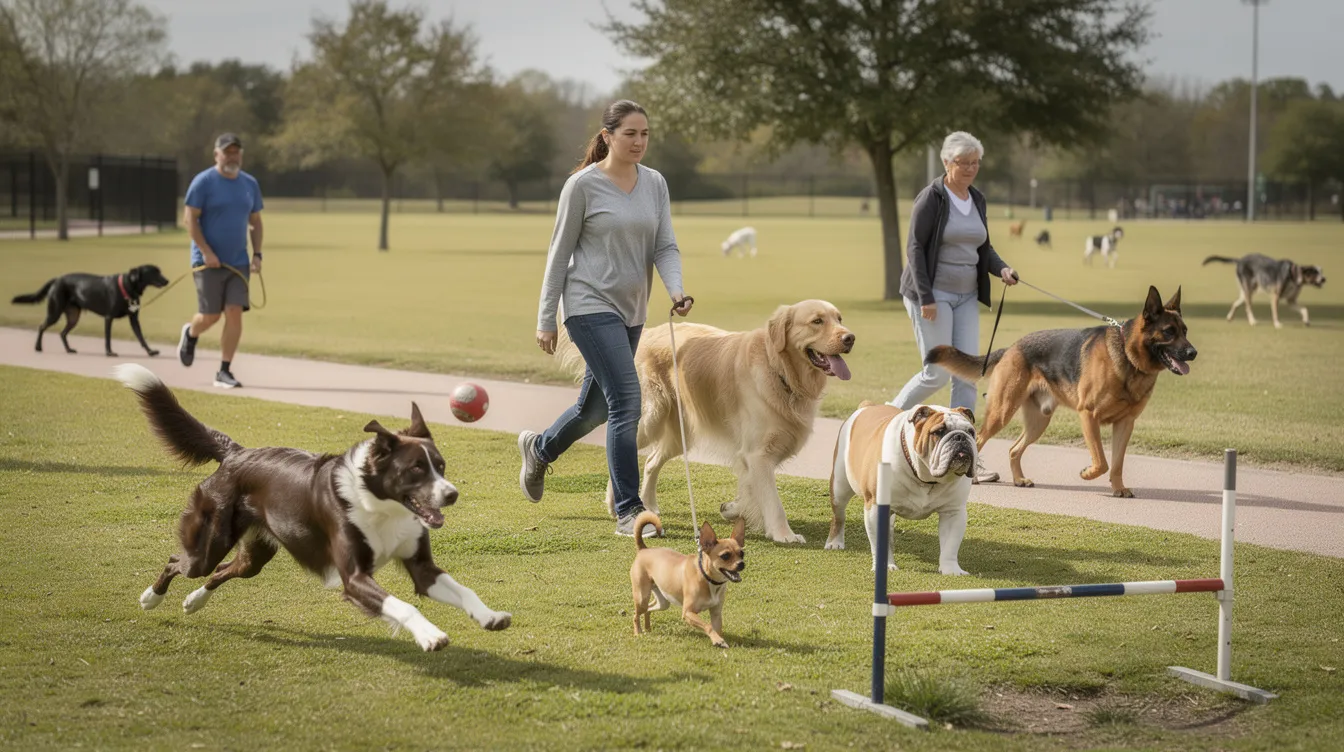
A dog’s breed heavily influences how much exercise your dog needs each day. Breeds developed for herding, hunting, retrieving, or guarding carry genetic drives that demand specific types and volumes of activity. Ignoring breed-specific needs is one of the most common reasons dogs develop behavioral issues – and one of the most straightforward problems to solve once you understand the requirements.
High-Energy Working and Sporting Breeds
High-energy breeds require significantly more exercise than lower-energy breeds. Herding breeds like Border Collies, Australian Shepherds, and Belgian Malinois, along with working breeds such as German Shepherds and Weimaraners, typically need one to two hours or more of vigorous activity daily. BreedTools categorizes these “athlete” breeds as needing 90+ minutes of vigorous exercise daily, while UK Kennel Club guidelines recommend more than 120 minutes for many of these breeds.
Herding and working breeds need 1 to 2+ hours of vigorous exercise daily. High-energy breeds need at least 30 minutes of rigorous exercise daily as a bare minimum, but most thrive well above that threshold. Activities that satisfy these breeds include off-leash running, structured fetch, agility training, herding exercises, long hikes, and swimming.
A survey of 1,713 dogs found that 70–80% of dogs in breeds with expected daily activity above 120 minutes failed to meet that guideline. When these dogs don’t receive adequate outlets, they’re significantly more prone to stereotypic behavior, separation anxiety, and reactivity – which is exactly why off-leash obedience training is so valuable for these breeds. It channels their energy into structured, purposeful work.
Moderate Energy Breeds
Sporting and terrier breeds generally need 45 to 90 minutes of exercise daily. Moderate-energy breeds like Golden Retrievers, Beagles, Labrador Retrievers, and Spaniels fall into this range. Adult dogs in this category typically require 30 minutes to 2 hours of exercise daily, depending on individual temperament and health.
A balanced approach works best here: combine regular walks with training games, moderate off-leash play, and mental enrichment activities. For these breeds, how much exercise matters, but so does variety. Rotating between jogging, fetch, hiking, and basic obedience drills keeps the dog engaged and prevents the monotony that leads to disengagement during training.
Medium to large dogs require longer, brisk walks and more room to run than their smaller counterparts. These dogs often do well with a mix of 30–45 minutes of physical activity plus 15–20 minutes of dedicated mental exercise daily.
Lower Energy and Brachycephalic Breeds
Lower energy breeds and brachycephalic dogs – Bulldogs, Pugs, Basset Hounds, and many toy breeds – have fundamentally different needs. Brachycephalic breeds need 20 to 30 minutes of gentle exercise daily due to respiratory limitations, while toy and small breeds require about 30 minutes of exercise daily. Small dogs often meet their exercise needs with multiple short walks or indoor games.
For these dogs, mental stimulation becomes proportionally more important. Puzzle games, nose work, gentle walks, and short play sessions can provide mental stimulation without overtaxing compromised airways or joints. Exercise should happen during cooler parts of the day, and owners should watch closely for heavy panting – an indicator that the dog has reached its limit.
| Breed/Energy Category | Example Breeds | Minimum Daily Activity | Ideal Daily Range | Recommended Activities |
|---|---|---|---|---|
| High-energy working/sporting | Border Collie, German Shepherd, Malinois, Weimaraner | ~90 min/day | 120–180+ min/day | Off-leash running, agility training, fetch, swimming, hiking |
| Moderate energy | Golden Retriever, Beagle, Labrador, Spaniels | ~45 min/day | 60–90 min/day | Jogging, playing fetch, hiking, training games, off-leash play |
| Lower energy / Brachycephalic | Bulldog, Pug, Basset Hound, toy breeds | ~20 min/day | 30–60 min (modified) | Gentle walks, sniffaris, puzzle toys, indoor play, swimming |
Exercise routines should be tailored to a dog’s age and health – not just breed – which brings us to the next critical variable.
Age-Based Exercise Programming
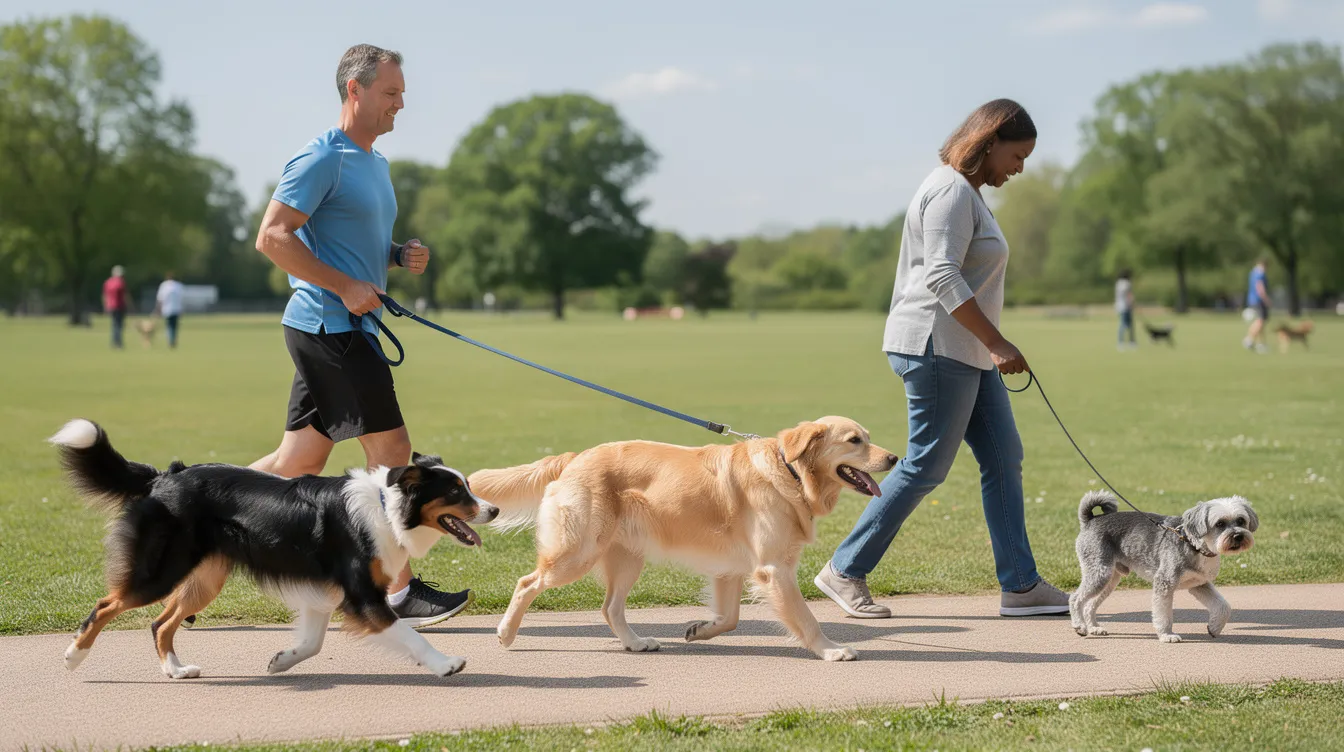
As a dog ages, its skeletal development, metabolic rate, endurance, and injury risk shift dramatically. A dog’s exercise routine must evolve through each life stage to keep the animal safe while maintaining the activity levels needed to stay healthy.
Puppy Exercise Guidelines
Puppies benefit from short play sessions throughout the day rather than extended exercise sessions. Puppies can follow the 5-minute rule for structured exercise per month of age, twice a day – meaning a four-month-old puppy gets two 20-minute sessions of structured walks or play. Puppies require 15 to 30 minutes of play or short walks per session.
Puppies need multiple short play sessions daily. These shorter play sessions prevent fatigue while building coordination, confidence, and social skills. Puppies should engage in short bursts of activity rather than prolonged running, as their growth plates haven’t yet closed. Puppies should avoid high-impact activities to protect their joints – no repetitive jumping, hard surface running, or forced long-distance walks until they’ve reached skeletal maturity (which can take 18–24 months in large breeds).
Mental exercise is especially powerful at this stage. Young dogs often tire mentally before physically, making puppy training sessions an ideal complement to physical play. Early obedience, socialization, and impulse control work establish the cognitive habits that pay dividends throughout the dog’s life.
Adult Dog Exercise Plans
The adult stage – approximately 1 to 7 years depending on breed – represents peak physical capacity. This is when dogs should receive the full breed-appropriate amount of exercise. Adult dogs typically require 30 minutes to 2 hours of exercise daily, matching the requirements of their energy level and individual drive.
Structured daily routines produce the best results. This means combining regular walks with off-leash sessions, obedience drills, enrichment activities, and strength work like stair climbing or hill hiking. The most effective approach integrates training directly into exercise – practicing heel work during walks, recall during off-leash play, and impulse control during fetch. This is what makes private lessons so effective: they teach owners to layer training into the activities they’re already doing.
Rest and recovery matter too. After particularly intense game sessions or hikes, allow a recovery day with lighter activity. Watch for limping, reluctance to move, stiffness, or lagging – all indicators of excess exercise or emerging joint problems.
Senior Dog Modifications
Older dogs benefit from daily movement but require reduced intensity and duration of exercise. Senior dogs should get at least 30 minutes of low-impact exercise daily, but the structure of that exercise needs to change substantially. Small breeds may enter their senior years around age 7–9; large and giant breeds often earlier.
The 2023 AAHA Senior Care Guidelines support maintaining total weekly movement in senior dogs while adjusting intensity and session length to what the body tolerates. Dogs with arthritis may require modified short walks each day rather than longer outings.
Here are five senior-appropriate exercise modifications:
- Shift to shorter, more frequent walks – three 10–15 minute gentle walks rather than one 45-minute outing
- Replace high-impact exercise with swimming or underwater treadmill work to reduce joint stress while maintaining cardiovascular fitness
- Add strength and balance exercises – sit-to-stand repetitions, figure-8 walks, and cavaletti stepping to preserve muscle tone
- Adjust the environment – use traction mats, ramps, and surfaces with good footing to prevent slips
- Increase mental enrichment – puzzle toys, scent work, and low-intensity training sessions to provide mental stimulation and slow cognitive decline
Consult your vet for exercise plans tailored to health issues, particularly for senior dogs with orthopedic or neurological conditions. Never eliminate exercise – but always adapt it to what the individual dog can safely handle.
Common Exercise Challenges and Solutions
Even the most well-intentioned dog owners encounter barriers to maintaining a consistent dog’s exercise routine. Here are the most common challenges and practical ways to overcome them.
Weather Limitations in Central New York
Syracuse winters bring snow, ice, and freezing temperatures that make long outdoor sessions impractical – and sometimes dangerous. Summer humidity poses risks for brachycephalic breeds and can cause heat stress in any active dog.
Solutions include shifting to indoor exercise: treadmill work, indoor fetch in safe spaces, nose games, obstacle courses using household furniture, and structured training sessions. Year-round indoor training preserves the routine even when outdoor conditions are hostile. During milder weather windows, use early morning or evening hours when temperatures are more moderate. Swimming in heated indoor facilities is particularly effective for keeping a dog active without weather constraints.
Behavioral Issues from Inadequate Exercise
Signs of insufficient exercise include destructive behaviors and excessive barking. Many dogs that present with chewing, digging, hyperactivity, or reactivity are simply under-exercised. Exercise reduces destructive behaviors in dogs, and adequate physical activity is foundational to any behavior modification program.
For dogs with significant behavioral challenges – reactivity, aggression, anxiety – structured physical and mental exhaustion early in the modification process lowers baseline arousal and makes the dog far more receptive to training. Programs like reactivity and aggression training build this exercise foundation before layering in stimulus exposure and impulse control work.
Time Constraints for Busy Owners
Not every owner has two hours a day for dog exercise. The good news: quality outperforms quantity. Even 20 minutes of well-structured exercise combined with mental stimulation can outperform an hour of aimless walking. An intense game of fetch, a treadmill sprint, or a focused training session can deliver substantial results in limited time.
Combine physical and mental exercise into single sessions – practice obedience commands during walks, incorporate recall training into off-leash play, or use feeding time as puzzle toy time. For owners who truly can’t provide enough daily activity, a 2-week board and train program delivers intense, consistent physical and mental work while building obedience skills that make future home exercise more efficient and effective.
Conclusion and Next Steps
Exercise is not a bonus – it’s the foundation upon which successful training, good behavior, and lifelong pet health are built. How much exercise your dog needs depends on breed, age, energy level, and individual health, but most dogs fall within the 30-minute to two-hour daily range. Exercise enhances a dog’s mental stimulation and overall well-being, reduces problem behaviors, maintains a healthy weight, and supports cognitive function well into the senior years.
Here’s how to take action today:
- Assess your current routine – track how many minutes of physical activity and mental exercise your dog actually receives each day using a simple log or a dog exercise calculator app
- Compare against breed and age guidelines – use the table and recommendations above to identify gaps between what your dog gets and what it needs
- Observe your dog’s behavior – signs like destructive behaviors, excessive barking, or weight gain suggest insufficient activity; indicators of excess exercise include heavy panting and reluctance to continue
- Adjust gradually – increase duration or intensity by 10–15% per week to avoid overuse injuries, and rotate activity types to keep your dog moving and mentally engaged
- Seek professional support – for dogs with behavioral issues, reactivity, or off-leash reliability goals, explore training options that integrate structured exercise into a comprehensive behavior program
Related topics worth exploring include recall training, off-leash reliability, and impulse control – all of which depend heavily on a proper exercise foundation to achieve lasting results. A well-exercised dog isn’t just healthier; it’s a dog that’s ready to learn, ready to listen, and a genuine pleasure to live with.
